Why Your Reformer Class Feels Harder in a Different Studio
Quick Answer: A red spring on one reformer is not a red spring on another. Spring tension is not standardised across manufacturers, so the same colour can differ substantially in resistance between brands, and springs also lose tension with age. Add differences in carriage weight, rope length and footbar height and the same exercise at the same setting is genuinely a different exercise in a different studio.
You have done this class for a year and you know your settings.
New studio, same setting, and suddenly you cannot control the carriage.
You did not get weaker on the drive over.
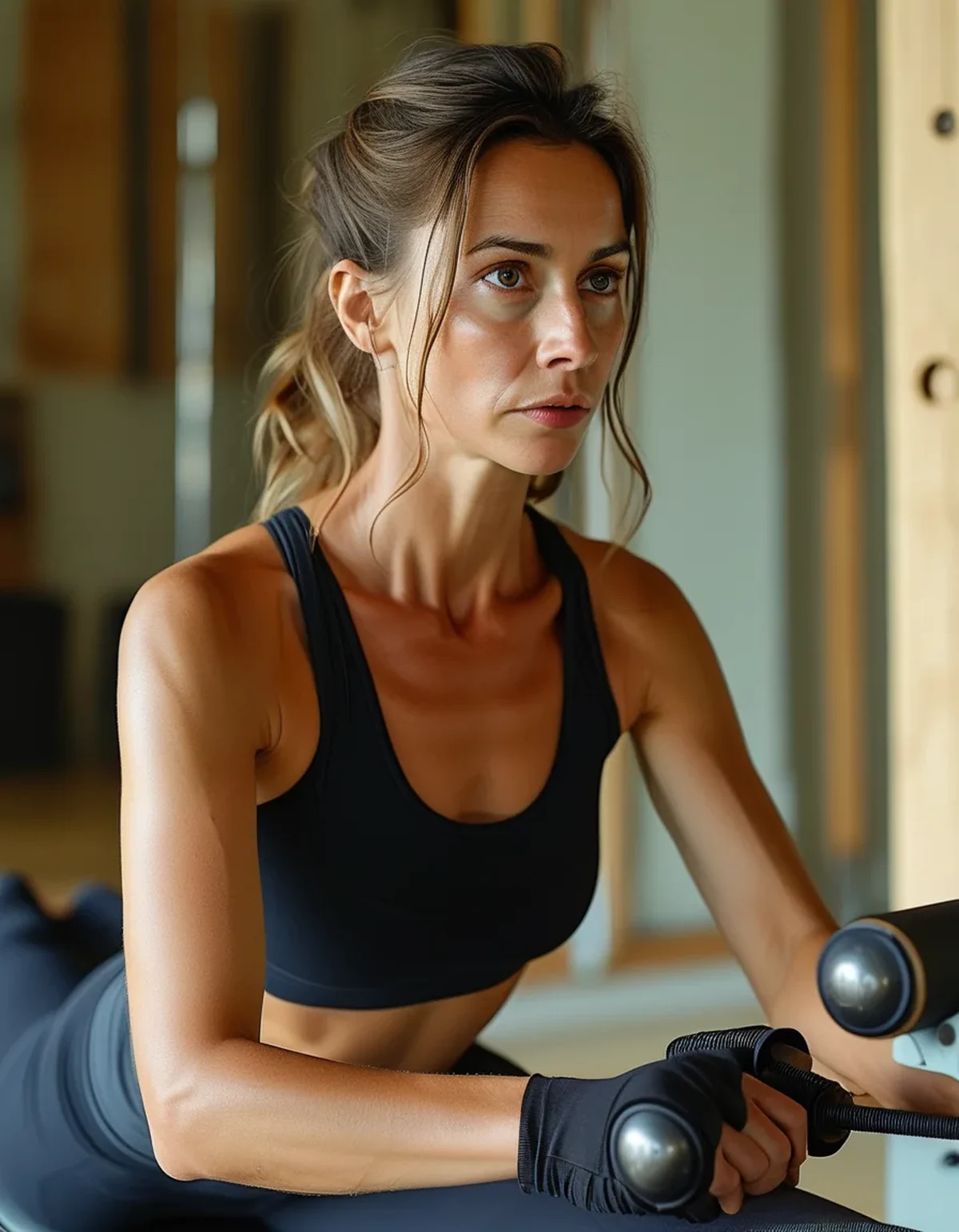
Why isn’t spring tension standardised?
Because there was never a governing body to standardise it.
Different manufacturers use different systems. Colour coding varies between brands, and there is no industry-wide agreement about what any colour means.
The same colour can differ substantially in resistance between two well-known brands. A studio switching equipment often reports members finding everything harder or easier overnight.
Spring count is not linear. Two springs are not simply twice one spring — spring behaviour combines in ways that depend on extension.
Springs fatigue with age. A well-used spring delivers less resistance than a new one, and studios replace them on varying schedules.
Carriage weight differs between machines. Heavier carriages require more force to move regardless of spring setting, particularly in footwork.
And rope and strap length change the leverage. Longer ropes alter the angle of pull, which changes effective resistance without touching a spring.
Why does more spring sometimes make things easier?
This is the part that confuses almost everyone, and it is worth understanding properly.
In footwork, more spring means more resistance. You are pushing the carriage away against the spring, so this behaves as expected.
In many arm and abdominal exercises, more spring is support. The spring stabilises the carriage, so heavier springs make the movement more controlled and easier.
Lighter springs demand more control. With less resistance holding the carriage steady, your stabilisers work considerably harder to prevent it from moving.
Direction of movement determines which applies. Moving away from the springs is resisted; moving toward them is assisted.
This is why an instructor may tell you to add a spring when you are struggling. It is not a concession — it is often making the exercise correct.
And it is why lighter is not automatically ‘advanced’. In some exercises heavier springs are the harder option, and in others lighter is. Blanket assumptions do not survive.
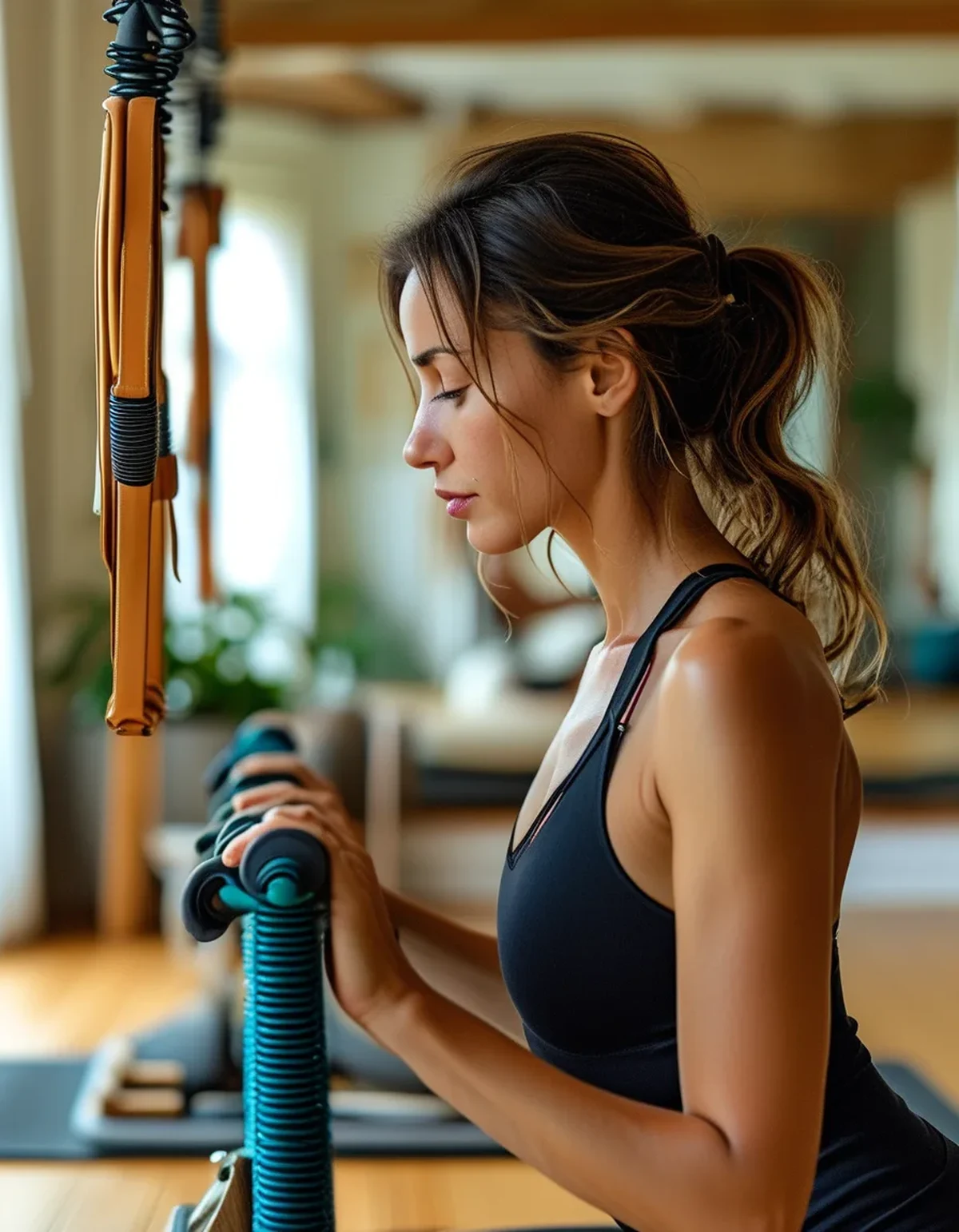
How should you adapt to a new studio or machine?
Assume nothing about the numbers and check with your body instead.
Tell the instructor it is your first time on this equipment. They know how their springs compare and can set you up in seconds.
Start one setting lighter than you would at home for resisted movements, and adjust upward once you feel it.
Test with footwork before class begins. A few slow reps tells you more than any conversation about colour.
Check the footbar height and rope length. Both change the exercise substantially and both vary between machines.
Note your settings for that studio specifically. Keep them separately from your home settings — they are not transferable.
Autumn note: studios often service equipment and replace springs at the end of summer before the busy season. If your regular class suddenly feels harder in September, ask whether the springs were changed. It is a very common and rarely explained cause.
What Nobody Tells You About Reformer Springs
Instructors adjust for the room, not just for you. In a mixed class, cues are often set for the machine and the majority, and it is entirely reasonable to run a different setting.
Springs should be replaced periodically. Most manufacturers suggest replacement every few years with regular use, and a stretched spring is both weaker and less consistent.
The carriage should be silent. Noise or a catch usually indicates wheels or track rather than springs, and it changes how the exercise feels.
Warm springs behave slightly differently from cold ones. Marginal, but the first class of the morning genuinely can feel different from the fifth.
Your own day-to-day variation is bigger than you think. The same setting genuinely feels different depending on sleep, hydration and what you trained yesterday.
And the honest bit: the number of springs is not a measure of ability. Progress in reformer work shows up as control, range and precision — not as heavier settings.
FAQ: Reformer Spring Questions, Answered
Why does my instructor keep changing my springs?
Because the correct setting is exercise-specific and body-specific. It is a sign of good instruction rather than of you doing something wrong.
Is a lighter spring more advanced?
Sometimes. For exercises where the spring provides support, lighter is harder. For resisted movements, heavier is harder. It depends entirely on direction.
How often should springs be replaced?
Typically every few years with regular studio use, sooner in high-volume settings. A visibly stretched spring should be replaced immediately.
Can I use my home settings at a new studio?
No. Treat every studio as a new starting point until you have tested footwork.
Why does the same class feel harder some weeks?
Your own variation — sleep, cycle, training load, hydration — plus possible equipment servicing. Both are real.
Should I be able to progress to fewer springs?
Not as a goal in itself. Progress in Pilates is control and precision, and spring count is a tool rather than a score.
This is general information, not medical advice.
TL;DR:
- Spring colour is not standardised between manufacturers — the same colour differs substantially between brands.
- Springs also fatigue with age, and carriage weight, footbar height and rope length all change the exercise.
- More spring is sometimes easier: springs resist movement away from them and support movement toward them.
- At a new studio, start lighter, test with footwork, and tell the instructor it is new equipment.
- Spring count is not a measure of ability — control, range and precision are.
Next time you visit a new studio, do three slow footwork reps before class. That is the whole calibration.
Keep Reading
This article is for general informational and styling purposes only. Fit, sizing, and product availability may vary.