Why Do Reformer Cues Work for the Person Next to You and Not for You?
Quick Answer: Reformer machines are a fixed size and bodies are not. If you are tall, your carriage travel is proportionally shorter and your straps are relatively shorter, so cues about range and reach describe a different place on your body than they do on a shorter person. If you are short, the opposite. The fix is usually footbar height and strap length, not effort — and most cue problems disappear once the machine is set to you rather than to the average.
The instructor says reach long through the arms and you already are.
The person beside you is nodding. You are not sure what you are supposed to do differently.
The cue is fine. It was written for a machine set up for a different body.
What does the machine assume about you?
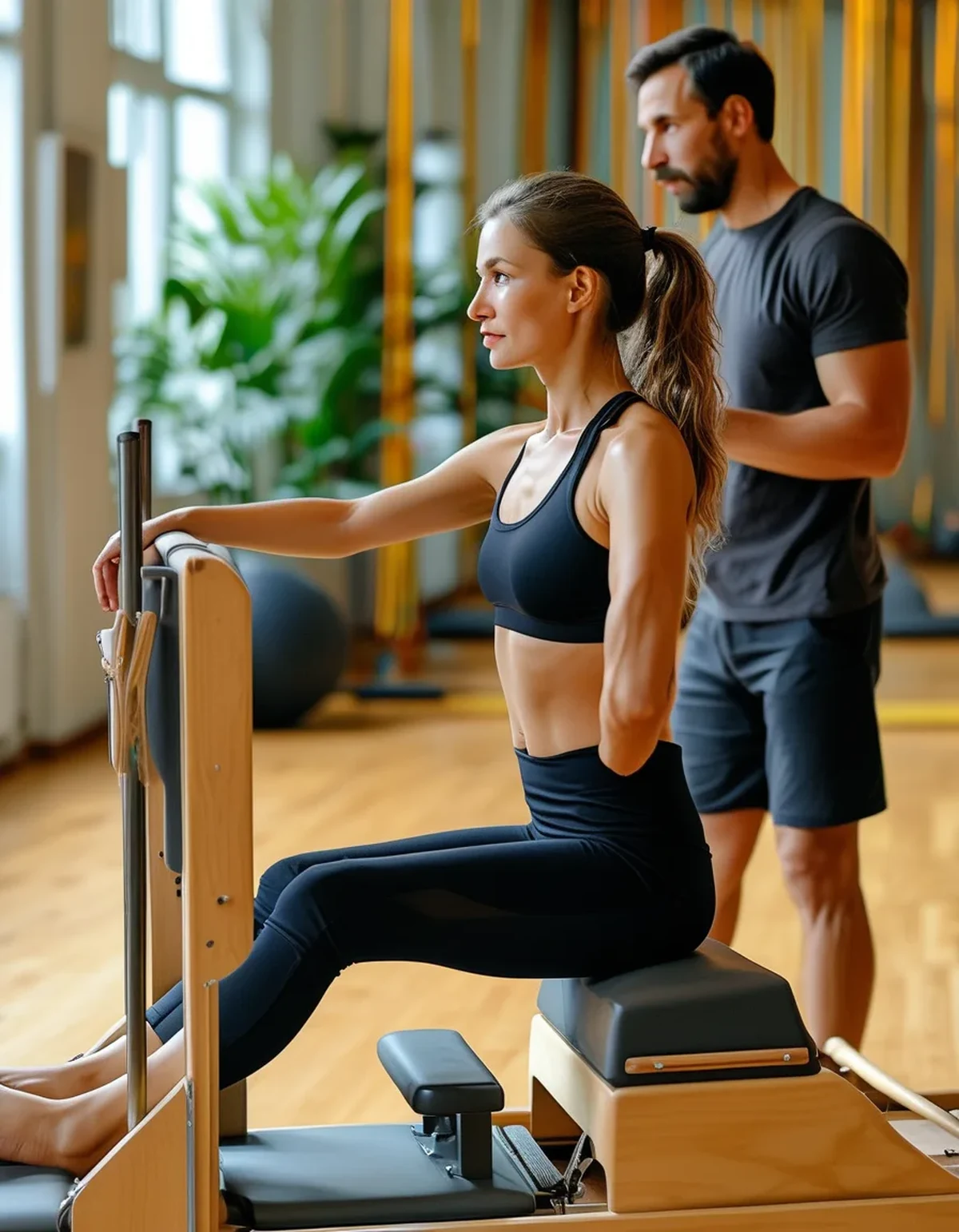
A reformer has fixed dimensions — carriage length, track length, footbar positions, and strap attachment points. Those dimensions were designed around a range of bodies, with the center of that range doing best.
If your proportions sit near the middle, cues land as intended and you never think about any of this.
If you are tall, several things shift at once. Your carriage travel is a smaller fraction of your limb length, so full extension arrives before the carriage has traveled far. Your straps are relatively shorter, so the same arm position produces more tension. And the footbar sits relatively lower against your leg length.
If you are short, the reverse. The carriage travel is large relative to your limbs, straps are relatively long, and the footbar sits relatively higher.
Neither is a disadvantage in ability. Both mean the standard cue describes a position your body reaches at a different point in the movement.
Which cues break first?
Cues that reference distance or the equipment rather than sensation.
Range cues. Come all the way in, go all the way out, full extension. For a tall person, all the way out often means the arms or legs are already locked well before the carriage stops. For a short person, all the way in may not actually close the carriage.
Tension cues. Feel the resistance at the start of the movement. Strap length changes where in the range tension begins, so the starting tension differs person to person on identical springs.
Position cues. Heels on the corners of the bar, hands at the edge of the shoulder rests. These assume a body-to-machine ratio.
What generally survives: sensation cues. Feel it in your outer hip, keep your ribs down, initiate from the back rather than the arm. These describe your body rather than the equipment, which is why experienced instructors lean on them.
If a cue mentions the machine, check the setup. If it mentions your body, do the work.
What should tall clients actually adjust?
Three settings, in order of impact.
Footbar height. Usually one position lower than the studio default. A high footbar with long legs forces excessive knee flexion at the start and compresses your range. Lowering it opens the starting position and restores usable travel.
Strap length. Longer, where the machine allows. Short straps on long arms mean you start already loaded and never get a low-tension portion of the range. Many reformers have adjustable straps or loop options and most people never touch them.
Head and shoulder rest position. A taller torso often means the shoulder rests sit lower on your traps than intended, which changes what the carriage pushes against.
And a general principle: a tall person often needs slightly lighter springs than the class default, not because of strength but because leverage is different. Longer limbs mean a longer lever arm, which means the same spring feels heavier at the end of the range.
The common mistake is a tall client working harder to reach the range everyone else is reaching. The range was not the goal — the position was.
What should shorter clients adjust?
Different settings, same principle.
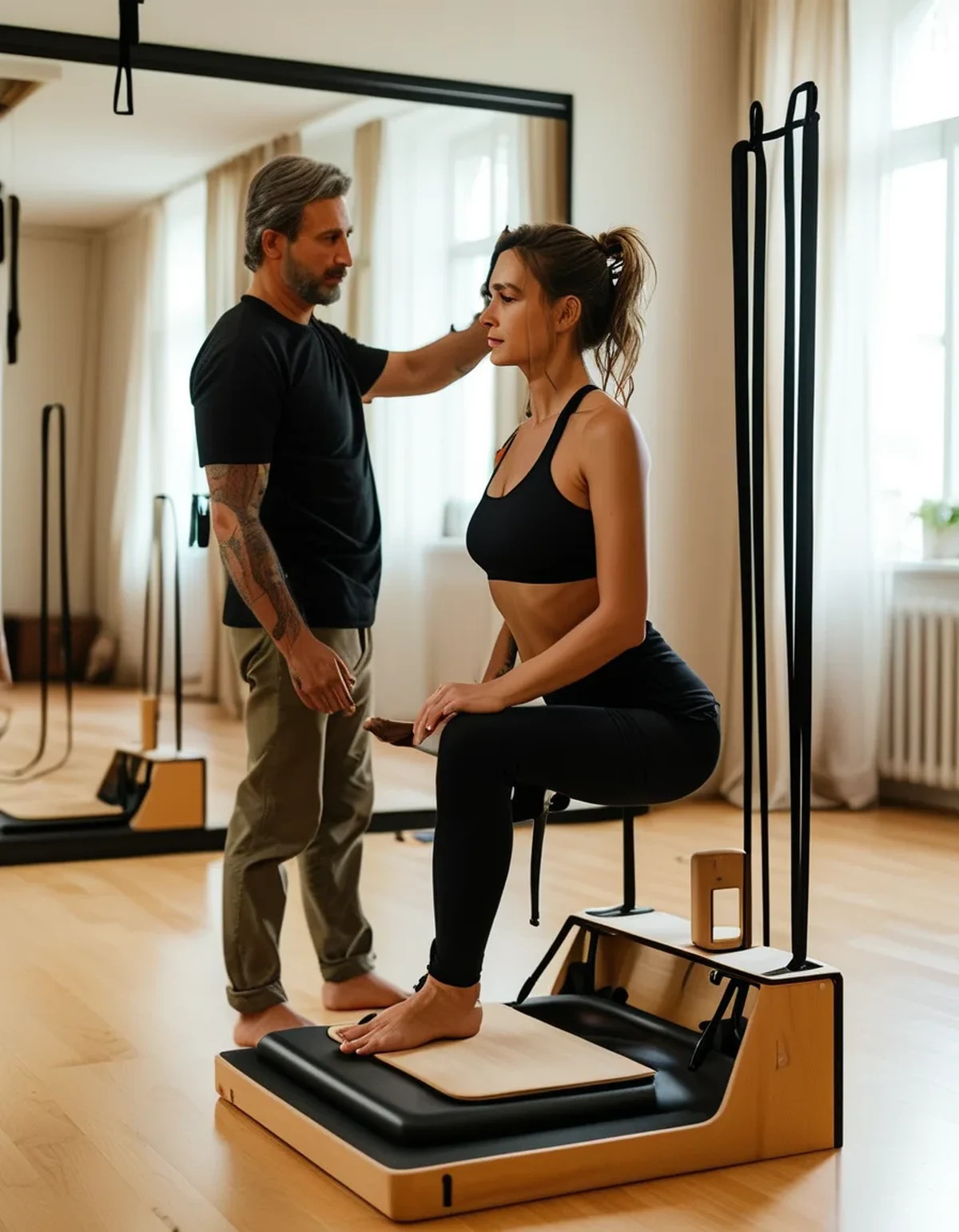
Footbar height, usually higher. A low bar with shorter legs means an already-open starting position with little range to work through.
Strap length, shorter. Long straps relative to arm length mean the first portion of every arm movement is slack, and you only meet resistance halfway through. Shortening the straps puts tension where the exercise intends it.
Watch the carriage stop. A short person can often reach full leg extension without the carriage traveling as far as expected, which is fine, or the opposite — travel further than intended and lose the position at the end. Neither is wrong, but it is worth knowing which is happening.
Spring weight often runs heavier than expected, again through leverage rather than strength. Shorter limbs mean a shorter lever arm and the spring feels lighter at the same setting.
A useful test either way: perform the exercise once and watch where in the range your body loses its position. That point is the real end of your range on this machine, regardless of where the carriage stops. Set up so that point sits at the end of the intended travel rather than in the middle of it.
What nobody tells you about torso-to-limb ratio
Height is a proxy and a crude one. What actually matters is the ratio of your torso to your limbs, and two people the same height can need opposite adjustments.
A long-torso, shorter-limbed person lying on the carriage sits differently against the shoulder rests than a short-torso, long-limbed person of identical height. Their arms reach a different distance from the strap anchors, and their legs meet the footbar at a different angle.
This is why height-based advice only half works, and why some people find that following tall-person guidance makes things worse despite being tall.
A more useful self-assessment: lie on the carriage in your usual starting position and look at where your hands fall relative to the shoulder rests, and where your feet fall relative to the footbar, without adjusting anything. If your hands are past the rests or well short of them, you are outside the assumed range and the arm cues will not describe you. Same for the feet and the bar.
Thirty seconds of that observation, done once, explains most of the cues that have never made sense to you — and it is worth mentioning to an instructor, who can then give you the version that fits.
How do you raise this without disrupting a class?
Instructors generally want to know, and the specific framing matters.
Say what happens, not what you think is wrong. I lose my lower back before the carriage closes is far more useful than I think my springs are wrong. The first is information; the second is a diagnosis you may not be positioned to make.
Ask before class, not during. Sixty seconds beforehand gets you a proper setup. The same question mid-flow gets a quick fix.
Ask about the setting, not the exercise. Should my footbar be lower for my height is a fast question with a fast answer.
Try a private session once if you have persistently found group cues confusing. One session spent establishing your settings pays back across every class after it, and this is precisely what most people never do.
And if you go to different studios — worth knowing as the season pushes more people indoors and class schedules shift — machines vary by brand in exactly these dimensions. Your settings at one studio are a starting point at another, not a transferable number. That is also why a class can feel harder or easier somewhere else with the same springs on the board.
FAQ: Machine Setup and Body Size, Answered
Should I just always use the setting the instructor calls out?
Use it as the starting point, then adjust if your position breaks down. Instructors call out an average, and they generally expect people at the ends of the range to modify. Silently struggling with a default is the least useful option.
Does this mean spring numbers are meaningless?
Not meaningless, just not comparable between people. A red spring produces the same force; what differs is the leverage your limb length applies to it. Track your own settings over time rather than comparing them to anyone else’s.
Why does the same exercise feel different on two machines in the same studio?
Spring age, carriage weight, and track condition all vary between machines even of the same model. Springs lose tension over years of use, so an older machine at the same setting is genuinely lighter.
I am average height and cues still do not land. What now?
Check torso-to-limb ratio rather than height, and check the footbar first. Footbar height is the most commonly wrong setting across every body size, and it is the one people almost never change from whatever the previous client left it at.
TL;DR:
- Reformers have fixed dimensions and bodies do not, so identical cues describe different positions on different people.
- Cues that reference the machine (full extension, all the way in) break first; cues that reference sensation survive.
- Tall clients usually need a lower footbar, longer straps, and often slightly lighter springs — leverage, not strength.
- Shorter clients usually need the opposite, and torso-to-limb ratio matters more than height alone.
- One private session spent establishing your settings fixes years of cues that never made sense.
The next time a cue does not land, check whether it was talking about your body or about the machine. If it was about the machine, the answer is a setting, not more effort — and that distinction is most of what separates a class that works from one you spend fighting the equipment.
Keep Reading
This article is for general informational and styling purposes only. Fit, sizing, and product availability may vary.