Why Your Footbar Height Changes More Than Your Spring Setting Does
Quick Answer: Footbar height changes the angle of your hip and knee at the start of every repetition, which changes which muscles are in a strong position to produce force. A lower bar deepens hip flexion and increases the demand on the glutes and posterior chain; a higher bar shortens the range and shifts emphasis toward the quadriceps. Springs change how much resistance you push against. The footbar changes what does the pushing. That is a bigger variable, and it is the one most people never touch.
Here is what each height actually does, and how to know which one you need today.
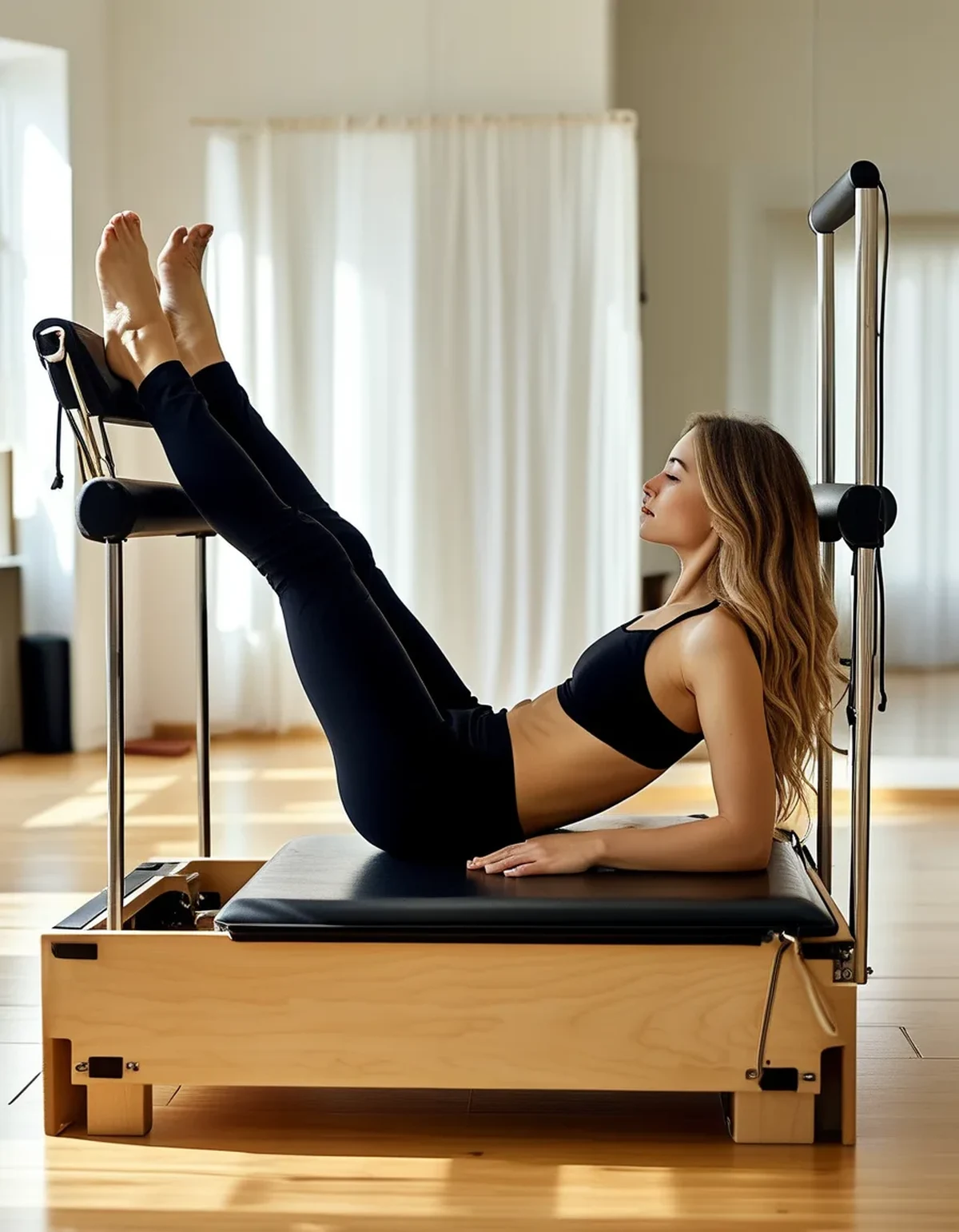
What does footbar height physically change?
It changes joint angles, and joint angles determine muscle contribution.
Starting hip and knee flexion. With the carriage at the stopper, a lower bar places your knees and hips in deeper flexion at the start of every rep. A higher bar shortens that starting range. Same exercise, different starting position, different muscles best placed to initiate.
Muscles produce force best in specific parts of their range. Deeper hip flexion at the start puts the glutes in a lengthened, mechanically favourable position to drive extension. A shallower start reduces that and increases the relative contribution of the quadriceps. This is not a small effect and it is why the same footwork sequence feels like a different exercise at a different bar height.
Pelvic position follows. Deep hip flexion can pull the pelvis into a posterior tilt if your hip mobility is limited, flattening the lumbar spine against the carriage. For some bodies that is comfortable; for others it is where low back complaints originate.
Ankle demand changes too. A lower bar generally requires more ankle dorsiflexion to maintain heel contact. Limited dorsiflexion shows up as heels lifting or the foot rolling out - which is a footbar problem being blamed on foot technique.
And the load direction changes. A higher bar means pushing more horizontally; lower means a more angled push. Your body is not producing force in the same vector, which is why the same spring setting feels heavier or lighter as the bar moves.
How do springs and footbar interact?
They are not independent, which is why changing one and keeping the other constant often produces a confusing result.
Springs set the magnitude of resistance. More springs, more force required. This is the variable everyone understands and adjusts.
Footbar sets your leverage against that resistance. In a position where your muscles have poor leverage, a light spring setting feels heavy. In a strong position, a heavy setting feels manageable. The perceived load is the product of both, and only one of them appears in the instruction.
Which explains a common experience: you drop a spring because footwork feels too hard, and it now feels unstable and oddly harder to control. The problem was the position, not the resistance - and reducing the spring in a poor position removes the support that was making the position tolerable.
A useful heuristic: change the footbar first, then the springs. Find a bar height where the movement pattern feels correct and the muscles you intend to work are the ones that fatigue. Then adjust springs for the load you want. Most people do this in reverse and end up chasing a setting that does not exist.
And expect the same numbers to feel different across studios. Reformer brands differ in bar geometry, carriage travel, and spring tension standards. Red on one machine is not red on another, and neither is position 3 on the footbar. Your body is the reference, not the label.
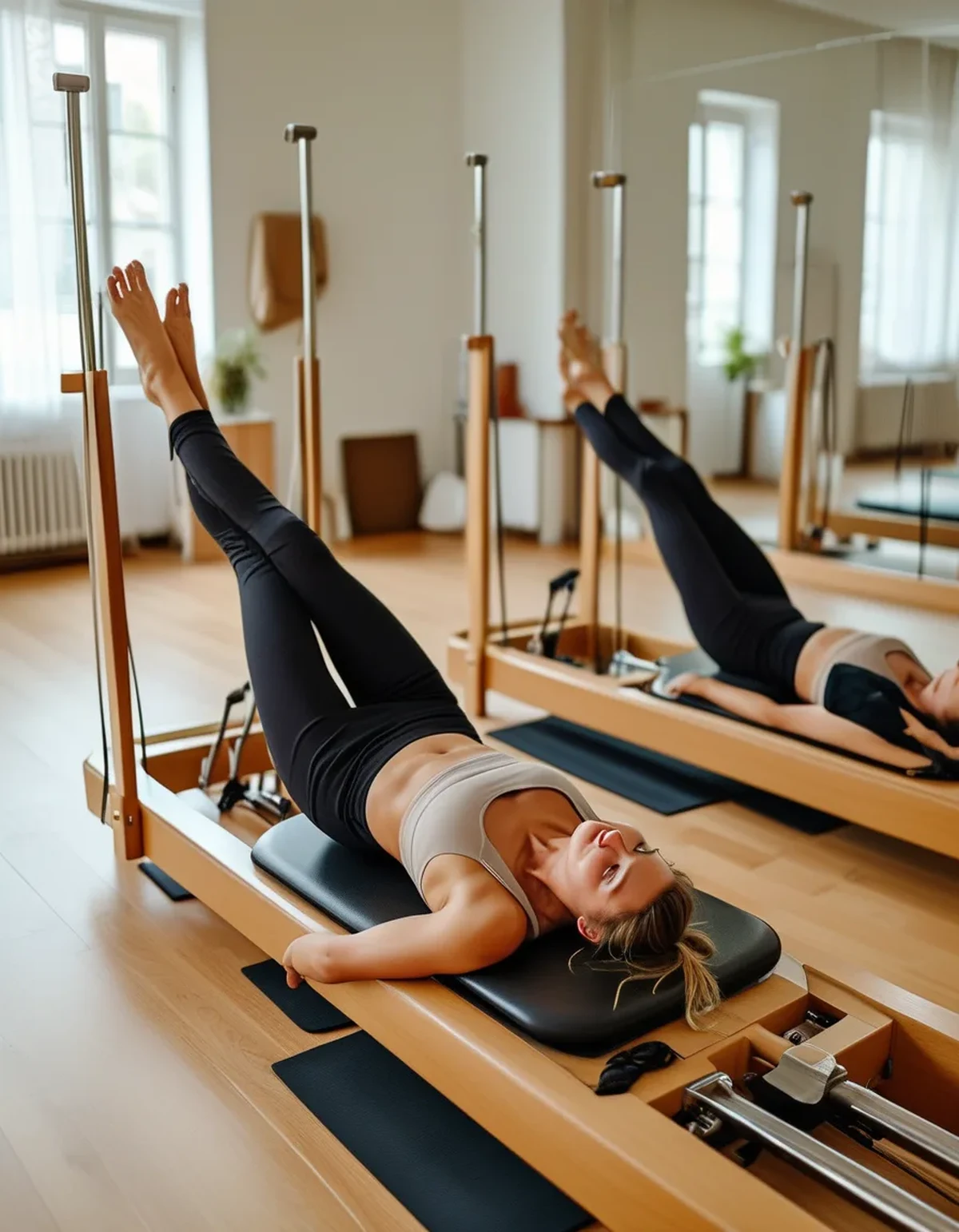
How do you choose the right height for today?
Test rather than default, because the right answer moves with your body.
Start with the movement quality test. Set up in footwork and take three slow repetitions. Can you keep your pelvis in a neutral position throughout? If the low back flattens hard against the carriage at the start, the bar is likely too low for your current hip mobility.
Then check heel contact. If your heels lift or your arches collapse on the press, that is usually insufficient dorsiflexion for the height - raise the bar rather than fighting the foot.
Then check where you feel it. If footwork intended for glutes is only registering in the front of your thighs, the bar is probably too high for that intention.
Adjust for the day, not for your record. Hip mobility varies with sleep, training load, time of day, temperature, and how long you sat before class. The bar height that was right last Tuesday is not automatically right today, and treating your usual setting as fixed is the most common source of a session that feels inexplicably wrong.
Go lower for glute and hamstring emphasis, higher for quad emphasis or when hips are tight. Deep hip flexion demands mobility you may not have on a given day. A higher bar on a stiff morning is a smarter session, not an easier one.
And after leg training, expect to need a different height. Fatigued, shortened hip flexors reduce your comfortable flexion range. Raising the bar the day after heavy squats is an appropriate adjustment, not a concession.
What Nobody Tells You About Reformer Settings
Instructors default to a mid setting for the whole class because they have to. With eight bodies of different proportions, one bar height cannot be right for all of them. The cue applies to the group; the setting is yours to adjust, and adjusting it is not a correction of the teacher.
Limb proportion matters more than height. Two people of identical height with different femur lengths need different bar heights for the same joint angles. Long femurs generally do better with a higher bar in footwork - this is anatomy, not ability.
Where you lie on the carriage is a hidden variable. Sliding a few inches toward or away from the footbar changes your effective joint angles as much as a bar adjustment would. Shoulder blocks give you a fixed reference - use them consistently or your setting is not really a setting.
The lowest bar is not the advanced option. It demands more mobility and is genuinely inappropriate for some hips at any experience level. Progression on the reformer is about control, not about extreme range.
Footbar affects arm and kneeling work too. Most people set it once for footwork and leave it, even when the exercise changes entirely. A quick adjustment between sequences is normal practice, not fussiness.
And the one that surprises people: changing the footbar often makes an exercise feel easier while doing more work - because the muscles you intended to use are finally in a position to contribute. Difficulty and effectiveness are not the same measurement.
This is general information, not medical advice. If you have a hip, knee, or lower back condition, or you are pregnant, ask a qualified instructor to set your positions specifically - reformer settings are one of the areas where individual guidance genuinely matters.
FAQ: Reformer Footbar Questions, Answered
What footbar height should I use for footwork?
The one where your pelvis stays neutral, your heels stay in contact, and you feel the intended muscles. That varies with your hip mobility and limb proportions, so it is a test rather than a fixed number.
Does a lower footbar make the exercise harder?
Usually more demanding on mobility and on the glutes, but not simply harder. If it forces your pelvis out of position, it is producing worse work, not more.
Why does the same spring setting feel different at a different bar height?
Because your leverage changed. Perceived load is the product of spring resistance and the mechanical position you are pushing from - the bar changes the second one.
Should I change springs or footbar first?
Footbar first. Find a position where the movement quality is right and the intended muscles fatigue, then set springs for the load you want.
Why do my heels lift during footwork?
Most often insufficient ankle dorsiflexion for that bar height. Raising the bar usually resolves it faster than trying to force the heels down.
Is it rude to change my settings mid-class?
No. Instructors expect it, and a group cue cannot be correct for every body in the room. Adjusting is what an experienced client does.
TL;DR:
- Footbar height sets your starting hip and knee angles, which decide which muscles are best positioned to produce force.
- Lower bar = deeper hip flexion, more glute and posterior chain. Higher bar = shorter range, more quadriceps.
- Springs set how much resistance; the footbar sets what does the pushing. Perceived load is both together.
- Adjust footbar first, springs second - most people do this backwards and chase a setting that does not exist.
- Test daily with three slow reps: neutral pelvis, heels in contact, intended muscles working.
- Limb proportions matter more than height - long femurs generally need a higher bar for the same joint angles.
- The same labels mean different things across reformer brands. Your body is the reference, not the number.
If the springs never feel right, you are probably adjusting the wrong thing.
This is general information, not medical advice.
Keep Reading
This article is for general informational and styling purposes only. Fit, sizing, and product availability may vary.