Why the Same Spring Setting Feels Different in Different Positions
Quick Answer: Spring resistance increases as the spring stretches, so a reformer’s resistance is not constant through a movement — it’s lowest near the stopper and highest at full carriage extension. Two exercises on identical spring settings can therefore feel completely different depending on where in the range they load you.
The instructor says two red springs. Footwork on two reds feels manageable. Long stretch on two reds feels like a different machine entirely. It sort of is.
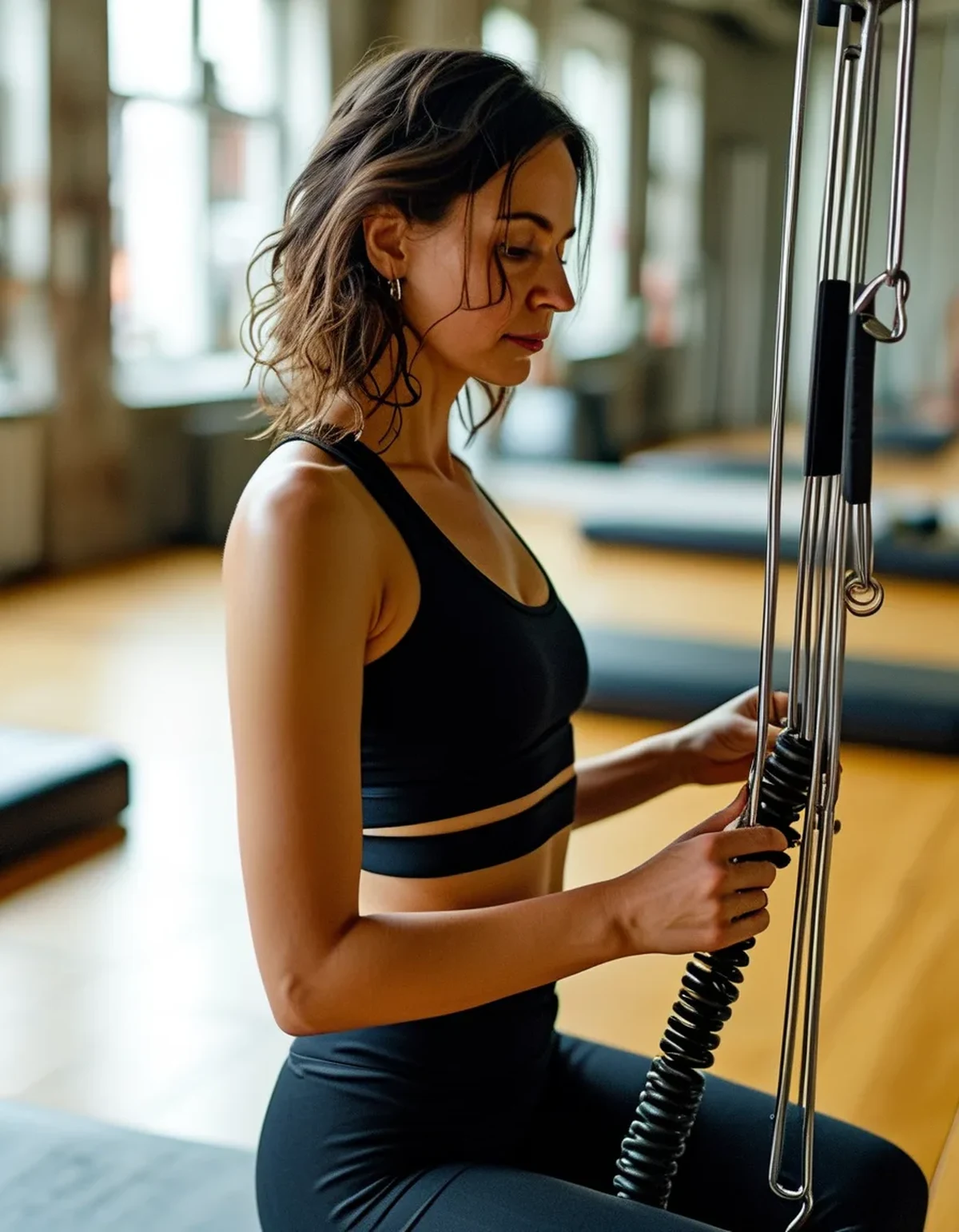
How does spring resistance actually behave?
Springs follow a simple principle: force increases proportionally with extension. A spring stretched twice as far pulls back roughly twice as hard.
On a reformer, that means resistance is minimal when the carriage is at the stopper and maximum at full extension. Every exercise loads a different portion of that curve. Footwork works near the heavy end of the range; a short-range abdominal exercise near the stopper works the light end — on identical springs.
Why does this make cueing so confusing?
Because spring designation is a starting condition, not a description of the load you’ll experience. Instructors cue springs because it’s the only concrete number available, but the number doesn’t capture what your body actually meets.
Body proportions add another layer. A taller person pushes the carriage further in the same exercise, reaching a higher point on the resistance curve than a shorter person on identical springs. Both were given the same cue and both are doing legitimately different work — which is why a class instruction that fits everyone rarely exists.
Does more spring always mean harder?
Not for every exercise, and this is the counterintuitive part. In many exercises, more spring provides more support — particularly those where the springs assist rather than resist.
In a supine footwork position, more springs mean more resistance to push against. In a standing or kneeling exercise where you’re controlling the carriage’s return, more spring assists the return and makes the eccentric control easier. Lighter springs in those positions demand more from you, not less, which is why a good instructor sometimes lightens the load to make something harder.
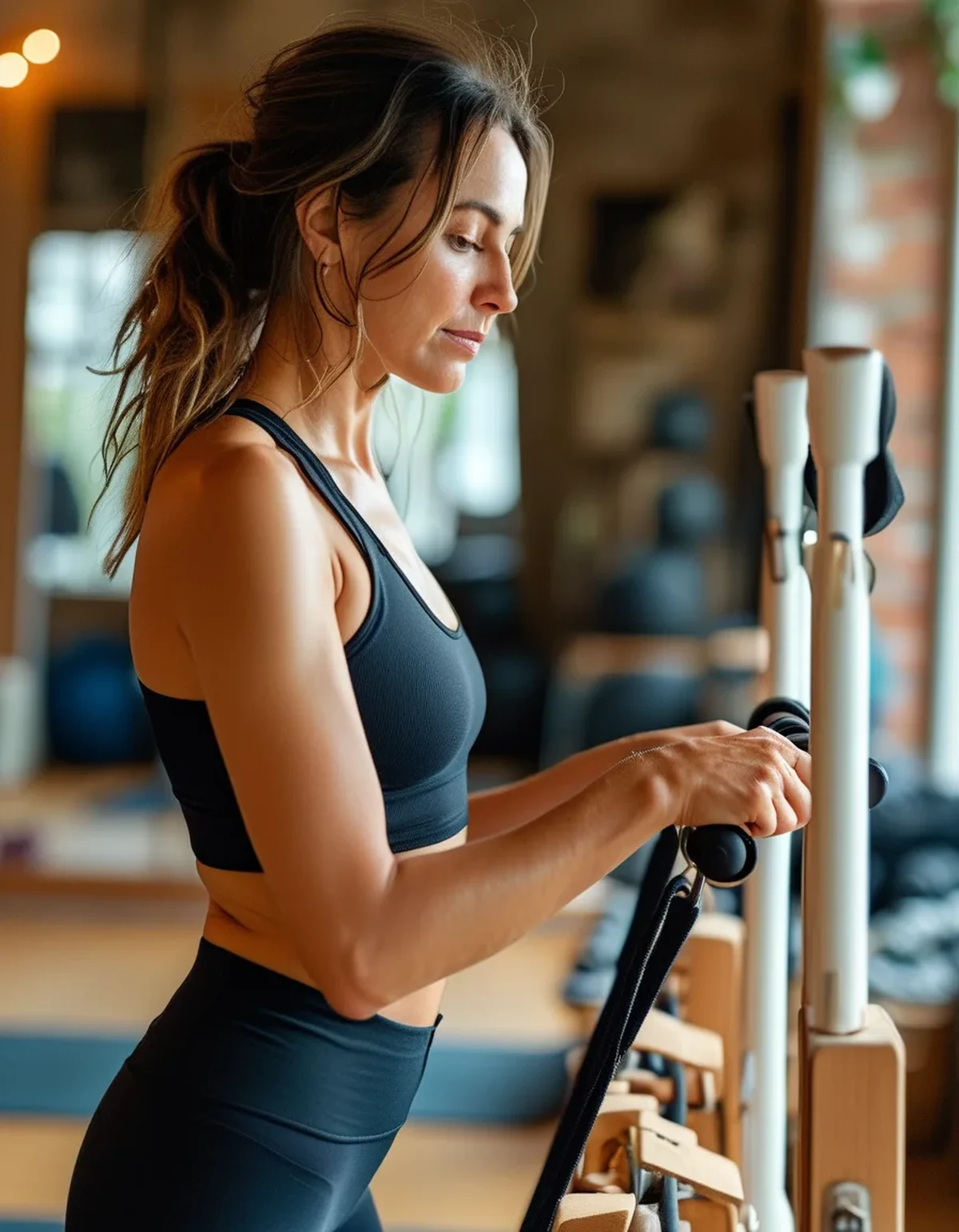
Myth vs Fact: Reformer Springs
Myth: Spring colors mean the same thing on every machine. Fact: Color coding varies between manufacturers. A red on one brand is not necessarily equivalent to a red on another.
Myth: More springs is always a progression. Fact: Depending on the exercise, fewer springs can be significantly more demanding. The direction of progression depends on whether springs are resisting or supporting.
Myth: Springs wear out on a visible schedule. Fact: Springs do lose tension over years of use, and this happens gradually and invisibly. Studio springs are replaced on a maintenance schedule for exactly this reason.
Myth: You should stick with one setting to track progress. Fact: Progress on a reformer shows up as control and range at appropriate settings, not as spring escalation.
How should you actually choose a setting?
By what the exercise is asking for, not by a fixed personal number. The useful question is where in the range does this exercise load me, and is the spring resisting or supporting?
Practically: if the carriage barely moves, the spring is too heavy for the range being worked. If you can’t control the return without momentum, it’s too light for a resisted exercise or too heavy for a supported one. And if you’re on a different machine than usual, expect settings to feel different and adjust by feel rather than matching the number — brand differences alone can account for a noticeable change.
FAQ: Reformer Spring Questions, Answered
Should I use the same springs as the person next to me?
No. Body proportions change where in the resistance curve you land, so identical settings produce different loads for different people.
Why does my home reformer feel different from the studio’s?
Spring calibration, color coding, and carriage weight all vary between manufacturers, and spring age affects tension. Both can be correct and still feel different.
How do I know if a studio’s springs need replacing?
A consistent feeling that one machine is lighter than the others in the studio is the practical signal. Studios generally track this on a maintenance schedule.
TL;DR:
- Spring force increases with extension, so resistance varies through every movement
- Where an exercise loads you in the carriage range matters as much as the spring setting
- Taller bodies reach a higher point on the curve at the same setting
- Springs sometimes support rather than resist — then lighter is harder
- Choose by what the exercise demands, not by a fixed personal number
The spring cue is a starting point, not a prescription. What you actually feel depends on where in the range you’re working.
Keep Reading
This article is for general informational and styling purposes only. Fit, sizing, and product availability may vary.