Why Some Reformer Pilates Moves Hit You Two Days Later Instead of Right Away
Quick Answer: Reformer Pilates relies heavily on eccentric muscle control — slow, resisted lengthening movements like controlled leg lowers and footwork returns — and eccentric contractions are specifically known to cause delayed onset muscle soreness (DOMS) that typically peaks 24-72 hours after the session, which is why a class can feel manageable in the moment but leave you sore two days later.
The delay isn’t a sign anything went wrong in class — it’s a well-documented pattern tied to exactly the kind of controlled resistance reformer work emphasizes.

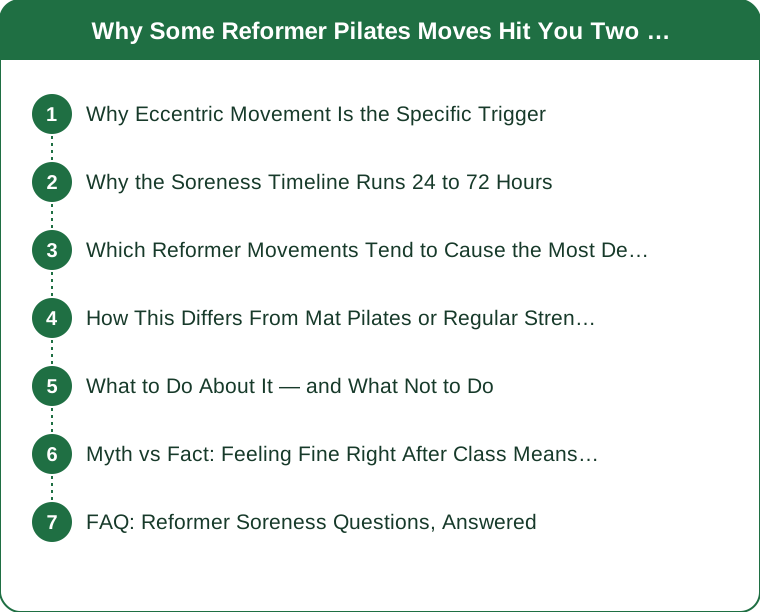
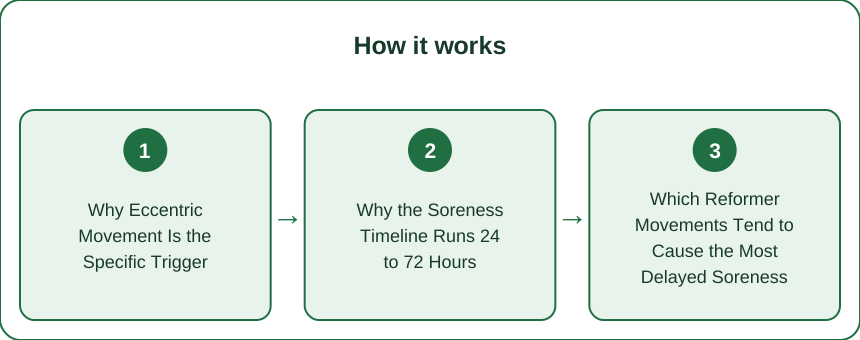
Why Eccentric Movement Is the Specific Trigger
Reformer exercises frequently ask muscles to lengthen under resistance rather than simply contract — think of slowly controlling the carriage back out against the springs rather than just pulling it in. This eccentric loading creates more microscopic muscle fiber stress than concentric (shortening) movement alone, and that specific type of stress is the primary driver behind DOMS, which is why reformer soreness can feel disproportionate to how hard a class actually felt in the room.
Why the Soreness Timeline Runs 24 to 72 Hours
The inflammatory and repair response that produces DOMS takes time to build — the microscopic stress happens during the class, but the sensation of soreness follows the body’s repair process, which typically peaks a day or two after the triggering session, not immediately. This delay is completely normal physiology, not a sign of overexertion or injury, and generally resolves within 3-5 days without any special intervention.
Which Reformer Movements Tend to Cause the Most Delayed Soreness
Footwork returns, long-lever leg work (like the ‘long stretch’ series), and controlled ab exercises that resist the spring’s pull back tend to be the most common sources of significant next-day-or-two soreness, since they involve the most sustained eccentric control. Movements that are fast or purely concentric tend to produce noticeably less delayed soreness than the slow, resisted return phases most reformer instructors emphasize for technique.

How This Differs From Mat Pilates or Regular Strength Training
Mat Pilates relies more on bodyweight and isometric holds, generally producing less pronounced DOMS than reformer’s spring-resisted eccentric emphasis. Compared to traditional strength training, reformer soreness often shows up in smaller stabilizer muscles (inner thigh, deep core, specific hip muscles) that don’t get heavily targeted in typical gym programming, which is part of why the soreness can feel unfamiliar even to people who train regularly elsewhere.
What to Do About It — and What Not to Do
Light movement, gentle stretching, and adequate protein intake support the normal recovery process, while completely resting the sore muscle group generally doesn’t speed recovery any faster than easy movement does. Returning to reformer class while still mildly sore from the previous session is safe and doesn’t worsen the soreness — pushing through genuinely sharp or joint-related pain, as opposed to typical muscle soreness, is the actual signal to scale back.
Myth vs Fact: Feeling Fine Right After Class Means It Wasn’t a Good Workout
Myth. Feeling fine immediately post-class and then sore two days later doesn’t mean the session was too easy — it often means the opposite, since a significant eccentric stimulus was applied even though it didn’t register as intense in the moment. Fact: DOMS severity is a poor predictor of workout effectiveness overall; consistent, moderate soreness patterns over weeks matter more for progress than chasing maximum soreness after every class.
FAQ: Reformer Soreness Questions, Answered
Is it safe to take another reformer class while still sore from the last one?
Yes, in most cases — light-to-moderate muscle soreness isn’t a reason to skip a session, and movement often helps it resolve faster than complete rest.
Does soreness fade as you get more experienced with reformer?
Somewhat, yes — as muscles adapt to the specific eccentric demands of reformer work, soreness intensity generally decreases even as workout intensity increases, which is a normal training adaptation.
Should beginners expect to be sore after their very first class?
Most beginners experience noticeable soreness after a first reformer session, often more from unfamiliar stabilizer muscle demands than from the class being unusually intense.
TL;DR:
- Reformer’s spring-resisted eccentric movements specifically trigger delayed onset muscle soreness (DOMS)
- Soreness typically peaks 24-72 hours after class, which is normal physiology, not overexertion
- Footwork returns and long-lever leg work tend to cause the most next-day soreness
- Light movement supports recovery better than complete rest; sharp joint pain is the actual signal to scale back
Soreness that shows up two days later isn’t a delayed warning sign — it’s just how eccentric-heavy training like reformer typically announces itself.
Keep Reading
This article is for general informational and styling purposes only. Fit, sizing, and product availability may vary.