Why Reformer Strap Length Changes the Exercise More Than the Springs Do
Quick Answer: Springs set how much resistance you face. Strap length sets where in your range that resistance appears and how much of the movement is actually loaded. A shorter strap means the load starts earlier and the hardest point sits deeper in your range; a longer strap gives you slack at the start and shifts the challenge toward the end. Changing strap length can transform an exercise without touching a single spring.
Your instructor keeps adjusting your straps and it feels like a fussy detail compared with which springs are on. It is not — it is often the more consequential setting.
Springs answer how heavy. Straps answer where. Most people only ever adjust the first question.
Here is what strap length is actually doing.
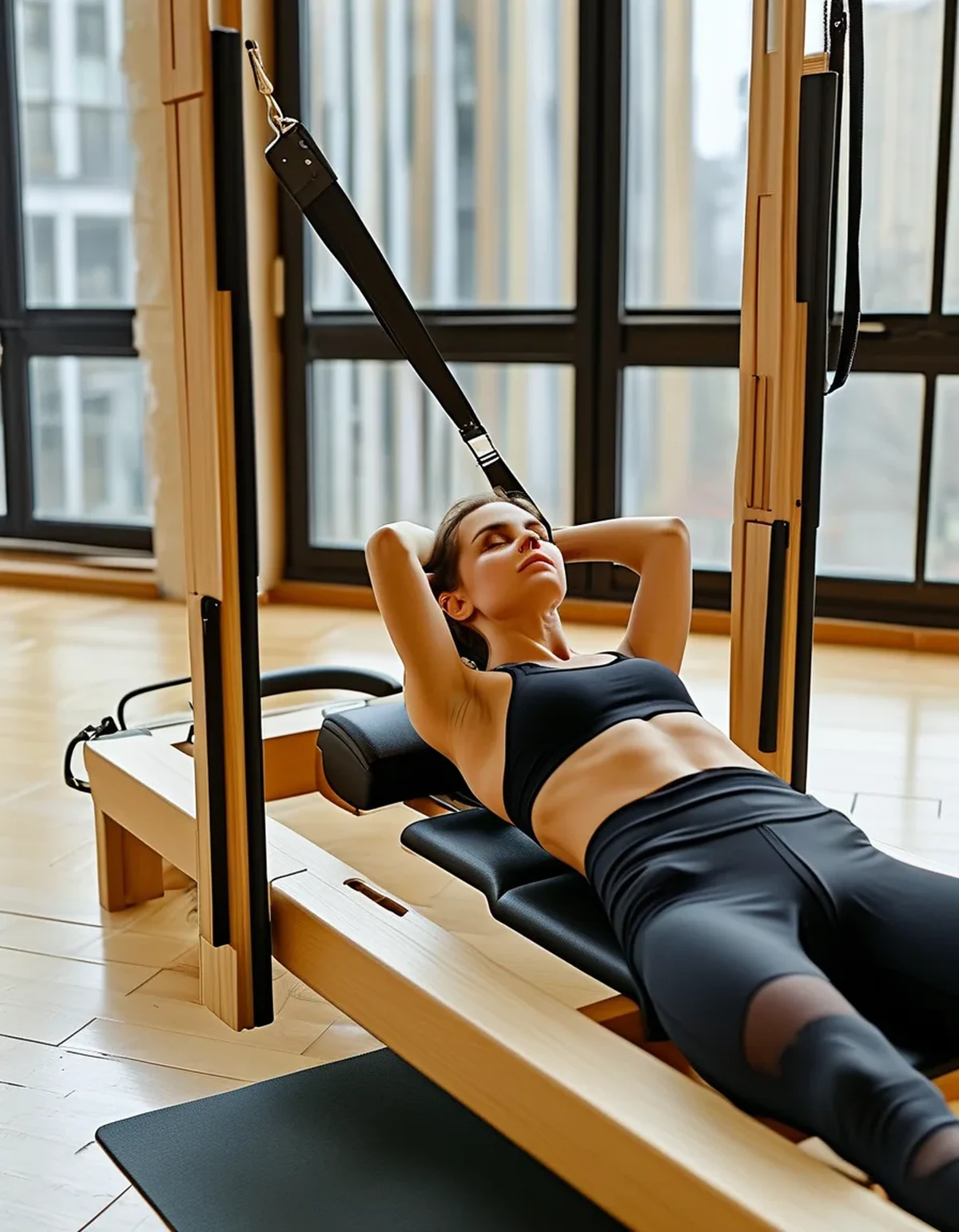
What does strap length actually change?
Where in your range the load engages, and how much of your movement is loaded at all.
A shorter strap engages earlier. Tension is present from the very start of the movement, so the muscle works throughout the full range including the deepest, most demanding position.
A longer strap creates slack. The first part of the movement is unloaded, so the working range is shorter and the challenge concentrates near the end. Sometimes that is what you want; often it is an accident.
It changes the angle of pull too. Strap length alters the geometry between your limb and the pulley, which changes which direction the resistance comes from. This is why the same exercise on the same springs can feel like it targets different muscles at two strap lengths.
And it decides whether you can stay in position. A strap that is too long for footwork means your carriage returns fully and you lose tension before you have finished the movement, which is where control tends to disappear.
How do you know if your strap length is wrong?
Three signals, all of which are easy to feel once you know to look for them.
Slack at the start. If you begin an exercise and feel nothing for the first few inches, the strap is too long for that movement. You are training a shorter range than you think.
The carriage bangs home. If the carriage returns to the stopper before your limbs have finished returning, the strap is too long and you have lost the eccentric portion — which is where much of the benefit lives.
You cannot get into the start position. If a strap is too short, you may not be able to reach the setup without your shoulders lifting or your lower back arching. That is a straightforward too-short signal.
Your shoulders creep up. In arm work, a too-short strap pulls you into the pulley and recruits the upper traps. If your neck is doing the work, lengthen the strap before you change the spring.
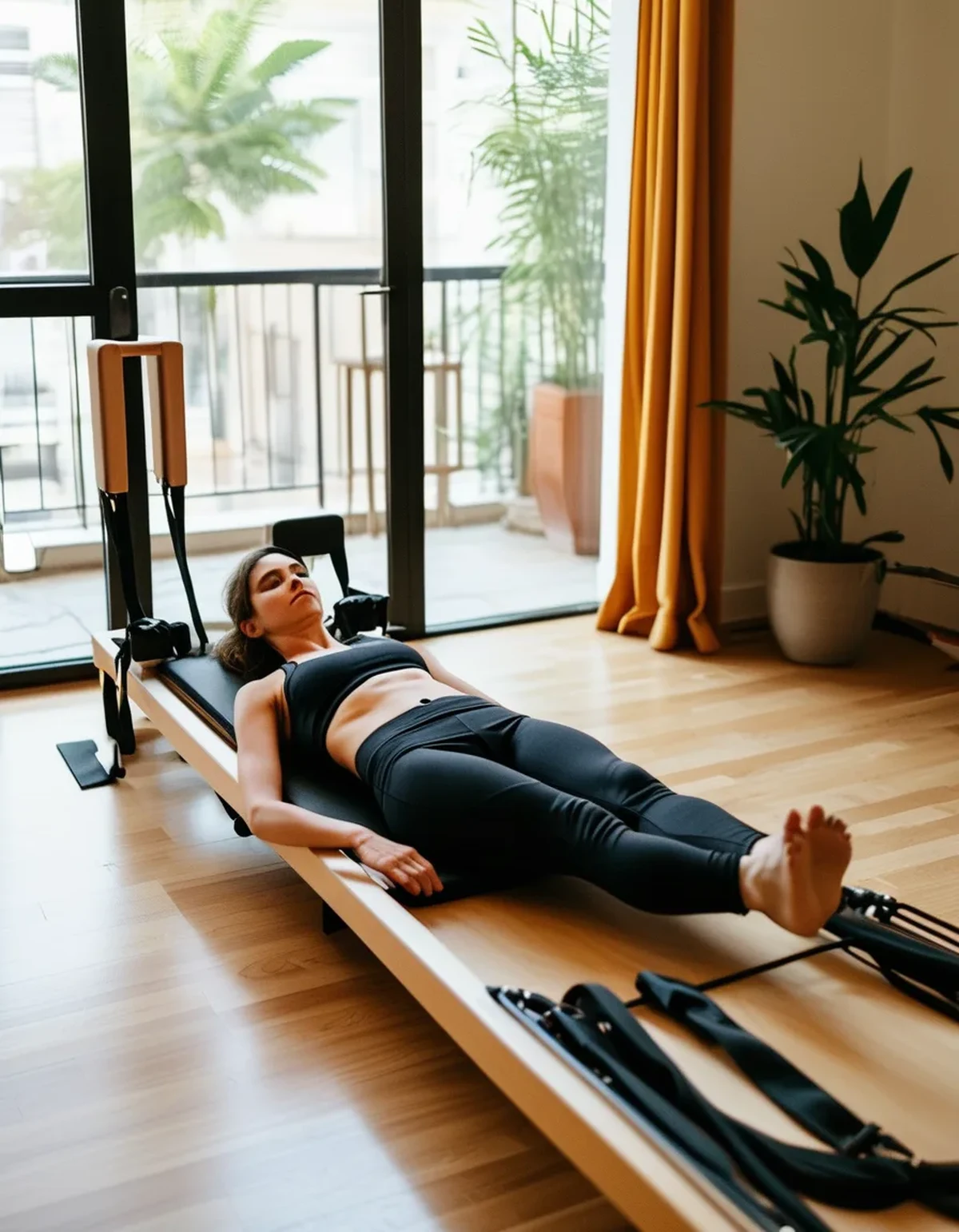
When should you deliberately change it mid-exercise?
When you want to change what the exercise emphasizes rather than how hard it is.
Shorten it to load the deep range. For hamstring and hip work, a shorter strap keeps tension where you are weakest, which is usually where you most need the work.
Lengthen it to protect a position. If your shoulders are struggling to stay down in arm work, or your pelvis will not stay neutral, a slightly longer strap buys you the range you can actually control.
Change strap length rather than springs when form is the issue. A common instinct is to lighten the spring when something feels wrong. If the problem is position rather than effort, strap length is usually the more precise fix — and it lets you keep the resistance that was working.
Standardize it once for your own body. Limb length means your correct strap setting will differ from the next person’s, permanently. Note your own settings so you can reproduce them, especially if you use different reformers.
Myth vs Fact: Reformer Settings
Myth: Heavier springs mean a harder exercise. Fact: in many exercises heavier springs provide more support and make the movement easier — footwork and some arm work included. Spring weight is not a difficulty scale.
Myth: Strap length is just about being comfortable. Fact: it determines the loaded range and the pull angle. It is a programming variable, not a comfort preference.
Myth: Everyone on the same exercise should use the same setting. Fact: limb length, torso length, and mobility all change the correct setting. Two people doing identical work will often have visibly different strap lengths.
Myth: If it feels easy, add a spring. Fact: check for slack first. Easy very often means you have shortened your working range without noticing, and the fix costs nothing.
Myth: All reformers are set up the same. Fact: strap length, rope length, and spring tension all vary between machines and drift as equipment ages. Reset your positions on an unfamiliar reformer rather than assuming.
FAQ: Reformer Strap Questions, Answered
How do I find my correct strap length quickly?
Get into the start position and check for two things: you can reach the setup without your shoulders lifting or your back arching, and you feel tension immediately as you begin to move. If both are true, the length is right for that exercise.
Should I adjust for every exercise?
For the ones where it matters most, yes — leg work in straps, arm work lying down, and anything where you are near the end of your reach. For footwork it is generally set once and left.
Why does the same setting feel different at a different studio?
Rope length, pulley height, and spring age all differ between machines and brands. It is normal to need a different-looking setting to get the same feel. Judge by the two checks above rather than by the number of knots.
This is general information, not medical advice. Sharp joint pain or nerve symptoms in any position mean stop and speak to your instructor or a healthcare professional.
TL;DR:
- Springs set how much resistance; strap length sets where in your range that resistance appears.
- A short strap loads the deep range from the start; a long strap creates slack and shortens your working range.
- Three warning signs: slack at the start, the carriage banging home before you finish, or shoulders creeping up.
- Shorten to load the deep range; lengthen to protect position when form breaks down.
- When form is the problem, change strap length rather than lightening the spring.
- Your correct setting differs from everyone else’s because your limb lengths do — note it and reproduce it.
Spring color is the setting people talk about and strap length is the setting that quietly decides what the exercise trains. Learn your own lengths and the same class starts doing considerably more for you.
Keep Reading
This article is for general informational and styling purposes only. Fit, sizing, and product availability may vary.