Why the Same Spring Setting Feels Heavier in a Cold Studio
Quick Answer: Spring steel stiffens slightly in cold, carriage wheels and track lubricant run less freely, and your own muscles and tendons are less compliant before warming. The combination makes a red spring feel like a red-plus, and the fix is a longer footwork sequence rather than a lighter setting.
The same class, the same machine, the same spring you always use.
The first ten minutes on a cool October morning feel like someone quietly added a spring while you were changing.
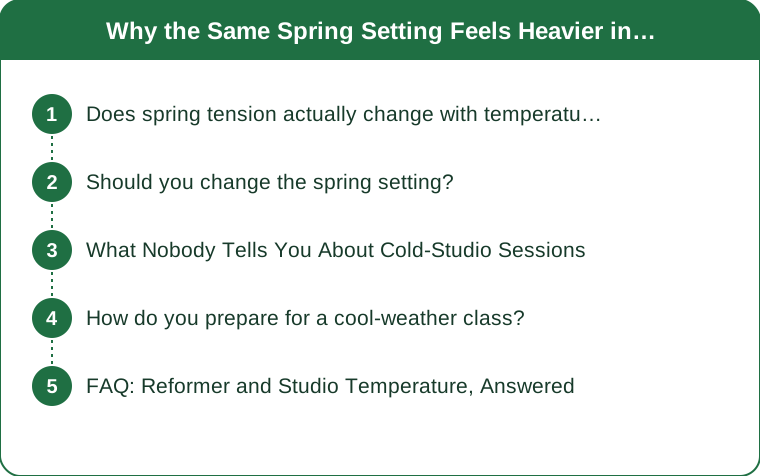
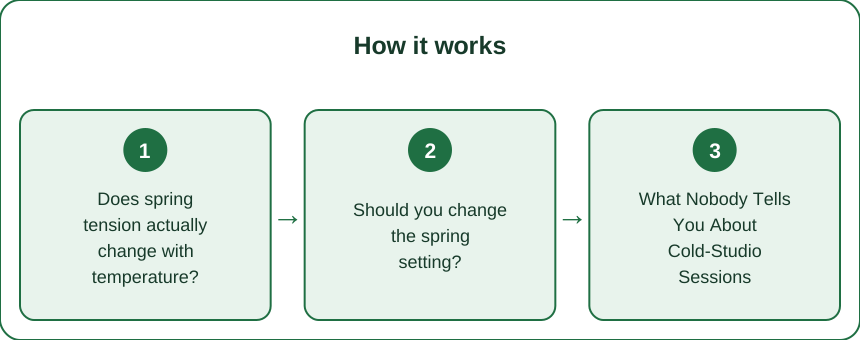
Does spring tension actually change with temperature?
Slightly, yes — and then two larger effects stack on top of it.
Steel gets marginally stiffer as it cools. The change in spring rate across a normal studio temperature range is small, a few percent at most. On its own you would probably not notice it.
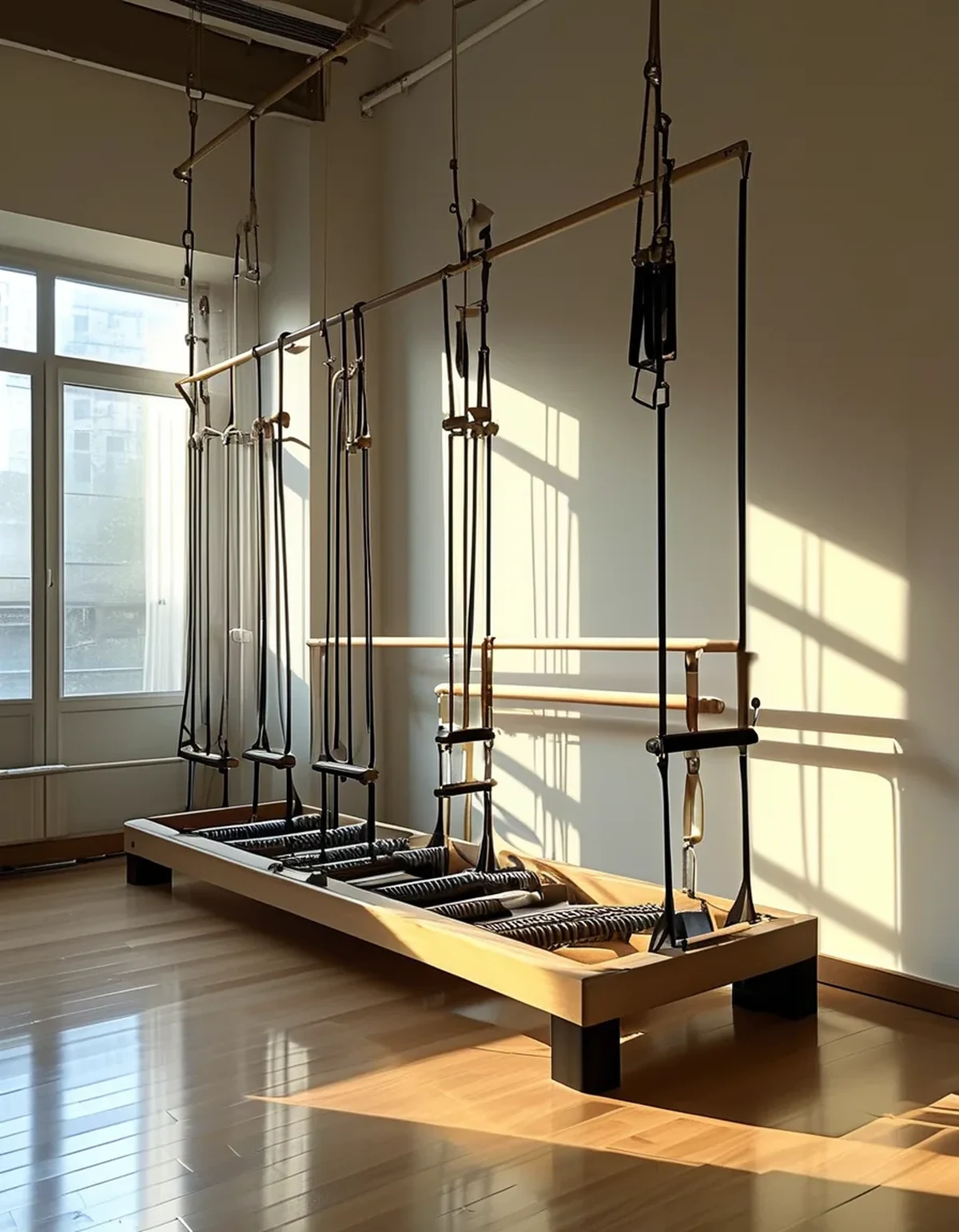
The carriage is the bigger mechanical factor. Wheel bearings and their lubricant run thicker in cold, so the carriage requires more force to start moving and rolls less freely once going. That resistance is not spring tension and feels exactly like it.
Your own tissue is the largest factor by far. Cold muscle is more viscous and cold tendon is stiffer. You produce force less efficiently and you feel resistance more, which accounts for most of the perceived difference.
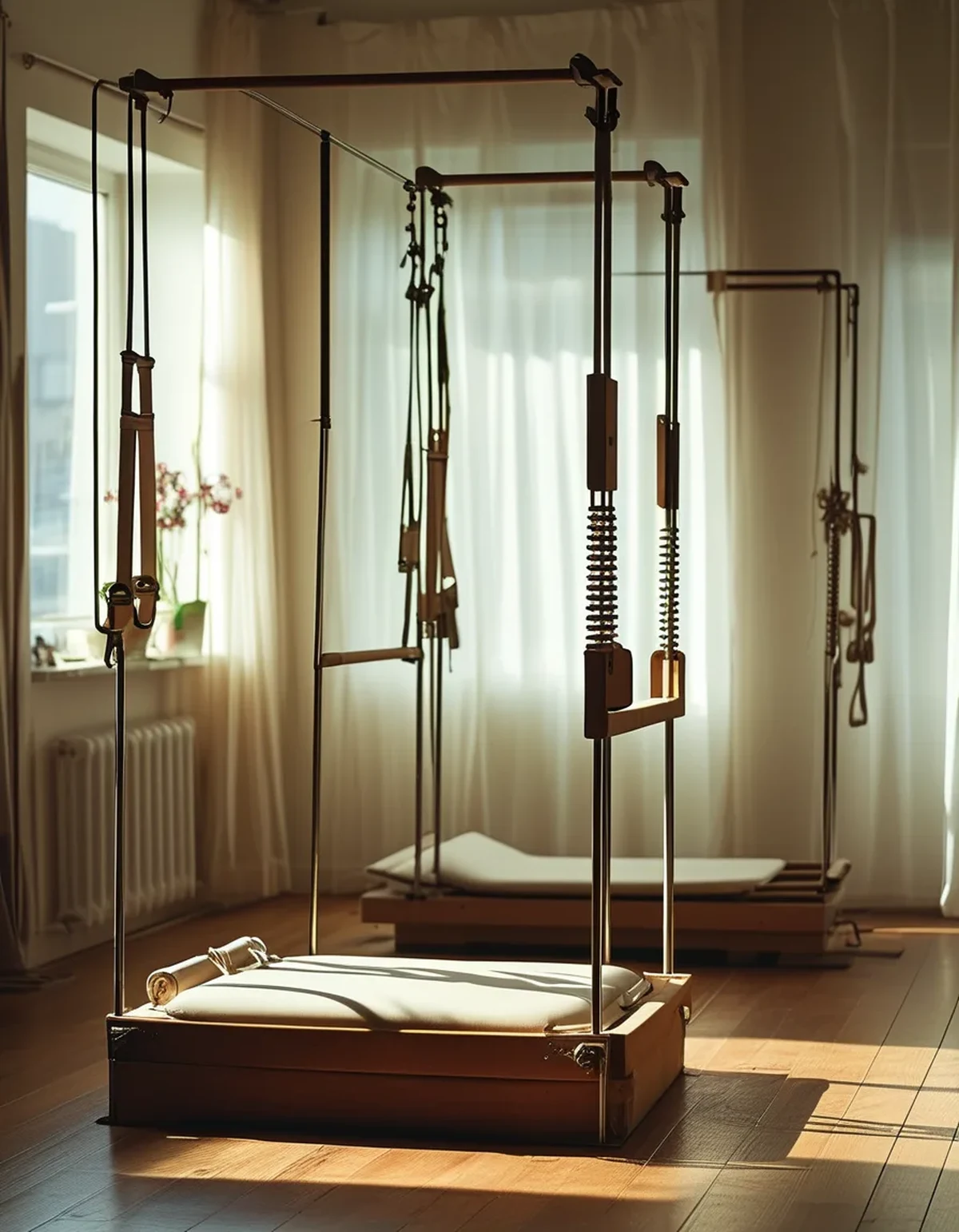
The footbar and straps feel different too. Cotton straps stiffen slightly with cold and dry air, and a colder aluminum footbar changes the sensory feedback through your feet. Small effects that all point the same direction.
All of it resolves by roughly minute twelve. The carriage warms with use, the room warms with bodies in it, and your tissue warms with work. The last third of a class rarely feels affected at all.
Should you change the spring setting?
Usually no — change the sequence instead.
Keep the setting and extend the footwork. Footwork exists partly to warm the system, both yours and the machine’s. Twice the usual number of repetitions at the start pays for itself across the class.
Drop a spring only for the first exercise, if you drop at all. Coming back up after footwork keeps the training stimulus intact and removes the awkward first two minutes.
Do not chase the sensation. The perceived heaviness is largely about your own readiness, so lightening the spring to match it means training lighter for the entire class rather than for the first five minutes.
For at-home reformers, check the springs are fully seated. Cold makes the hooks and the gear bar less forgiving, and a partially seated spring is a genuine safety issue rather than a feel issue.
Expect the effect to be biggest on the first class of the day. A studio that has been running since 6am is a different environment by the 9am class, both in air temperature and in how the machines have been used.
What Nobody Tells You About Cold-Studio Sessions
Your peak strength arrives late in the class rather than early. In cool conditions the strongest part of the session is minutes 20 to 40, not minutes 5 to 15. Classes that front-load the hardest work suit warm rooms better.
The instructor’s spring recommendation assumes a warm body. Standard cues are calibrated to the average condition, which in October at 7am you are not yet in. Adjusting for the first two exercises is reasonable and not a step backward.
Grip suffers first and quietly. Cold hands lose grip strength, which shows up in strap work as fatigue you attribute to your back. Warming your hands before class is a genuinely useful thirty seconds.
Studios are often coolest in the corners and by the windows. If you consistently find one machine harder, check where it sits. This is a more common explanation than a difference in the machine itself.
Your range of motion is the thing to protect. In cold conditions the temptation is to reach the same end range by pushing. Accepting a slightly smaller range for the first ten minutes is the better trade, and the full range returns without forcing it.
How do you prepare for a cool-weather class?
Ten minutes before you arrive does most of the work.
Walk briskly for five to ten minutes to get there if you can. Arriving warm removes almost the entire problem, and it is free.
Keep a layer on for the first ten minutes. Removing it at minute twelve is easy; warming up from cold in a cool room is slow. Long sleeves through footwork is a reasonable default.
Warm your hands and feet specifically. Both are load-bearing in reformer work and both cool fastest. A minute of rubbing and ankle circles before you get on the machine is not fussy, it is targeted.
Arrive five minutes early rather than exactly on time. Those five minutes of gentle movement in the room change the first third of the class substantially.
Book later classes in the coldest months if you have the flexibility. Body temperature and joint mobility both peak in the afternoon, and a 5pm class is a measurably different experience from a 7am one. If you have a joint condition that flares in cold, mention it to the instructor rather than working around it silently. This is general information, not medical advice.
FAQ: Reformer and Studio Temperature, Answered
Should I use lighter springs in a cold studio?
Generally no. The perceived heaviness is mostly your own tissue being cold rather than the springs genuinely changing, so lightening the setting means under-training for the whole class. Extending footwork is the better adjustment, or dropping a spring only for the first exercise.
Why does the carriage feel sticky on cold mornings?
Wheel bearing lubricant thickens as it cools, so the carriage takes more force to start and rolls less smoothly. It resolves within a few minutes of use as the mechanism warms, and it is not a sign the machine needs servicing unless it persists once the room is warm.
Why is the first class of the day always harder?
Cool room, cold machines, and your own body at its stiffest point in the daily cycle — all three at once. Later classes benefit from a warmed room, machines that have been running, and a body several hours further into its day.
TL;DR:
- Spring steel stiffens slightly, carriage bearings run thicker, and your own tissue is the largest factor by far.
- Keep the spring setting and extend footwork instead — lightening it means under-training the whole class.
- Warm your hands and feet specifically; both are load-bearing and both cool fastest.
- Peak output arrives at minutes 20 to 40 in a cool room rather than early, so judge the class by its middle.
The red spring is still a red spring. You and the machine simply both need twelve minutes before it behaves like one.
Keep Reading
This article is for general informational and styling purposes only. Fit, sizing, and product availability may vary.