Why Some Reformer Pilates Moves Hit You Two Days Later Instead of Right Away
Quick Answer: Reformer Pilates relies heavily on eccentric muscle control — slowly resisting the spring’s return — which is known to cause delayed onset muscle soreness (DOMS) that typically peaks 24-48 hours later, even when the class didn’t feel especially intense at the time.
You walked out of your first reformer class feeling fine, maybe even underworked. Two days later you can barely sit down. Here’s why that’s not unusual.

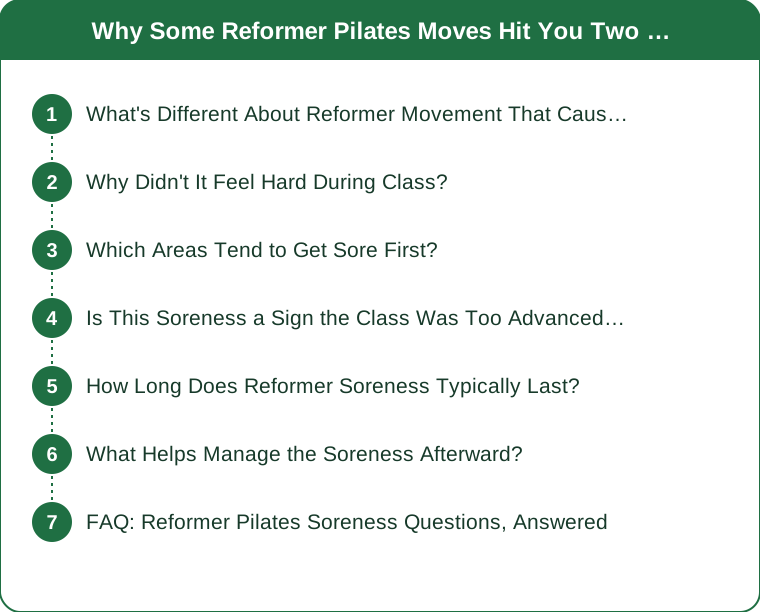
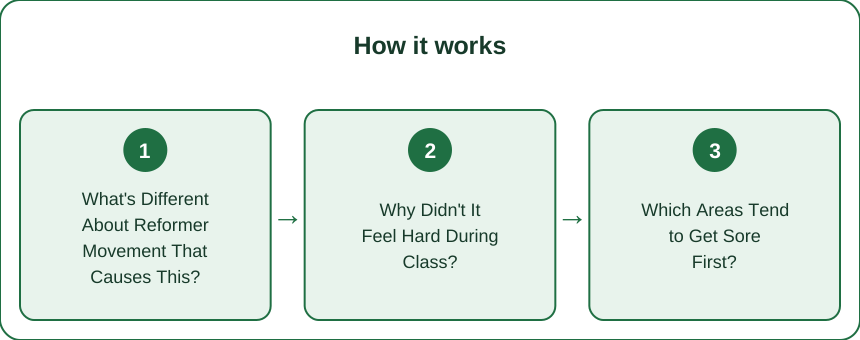
What’s Different About Reformer Movement That Causes This?
Unlike mat Pilates, the reformer’s spring resistance means you’re constantly controlling a slow eccentric return — lengthening a muscle under tension rather than just contracting it. Eccentric contractions are the specific type most associated with delayed soreness, more so than concentric (shortening) movements.
Why Didn’t It Feel Hard During Class?
Reformer exercises are performed with control and low, sustained resistance rather than max-effort bursts, so the in-the-moment burn is often mild even while the muscle is accumulating significant microscopic strain. That mismatch between how hard it feels and how much work is actually happening is exactly why the soreness surprises people.
Which Areas Tend to Get Sore First?
Inner thighs, deep core stabilizers, and the backs of the legs (hamstrings and glutes) are the most commonly reported delayed-soreness spots, since these muscles are doing sustained eccentric stabilization work throughout most reformer sequences, even in exercises that don’t look leg-focused.

Is This Soreness a Sign the Class Was Too Advanced for Me?
No — DOMS from new eccentric movement patterns happens to experienced Pilates practitioners too when they try reformer for the first time, regardless of general fitness level, because it’s a novel movement pattern for the muscle, not a fitness deficiency.
How Long Does Reformer Soreness Typically Last?
For a first class, expect soreness to peak around 48 hours and resolve within 3-5 days. It typically lessens significantly by your second or third class as your muscles adapt to the specific eccentric demands.
What Helps Manage the Soreness Afterward?
Light movement (a walk, gentle stretching) tends to help more than complete rest, and staying hydrated supports recovery. Avoid another intense reformer session until the soreness has substantially eased — usually 2-3 days after a first class.
FAQ: Reformer Pilates Soreness Questions, Answered
Is it normal to be more sore from reformer than mat Pilates?
Yes, for most people — the eccentric loading from spring resistance is a bigger soreness driver than typical mat work.
Should I take reformer classes back-to-back as a beginner?
Spacing your first few classes 2-3 days apart lets you gauge recovery before adding frequency.
Does reformer soreness mean I’m building strength faster?
Soreness isn’t a reliable strength-gain indicator on its own, but the eccentric control involved is a legitimate strength-building stimulus over time.
TL;DR:
- Reformer’s spring resistance creates sustained eccentric loading, the main DOMS driver
- Class can feel easy in the moment while still causing real delayed soreness
- Inner thighs, core, and hamstrings/glutes are the most common sore spots
- Soreness typically peaks at 48 hours and fades within 3-5 days
- It happens to experienced practitioners too — it’s about movement novelty, not fitness level
Keep Reading
This article is for general informational and styling purposes only. Fit, sizing, and product availability may vary.