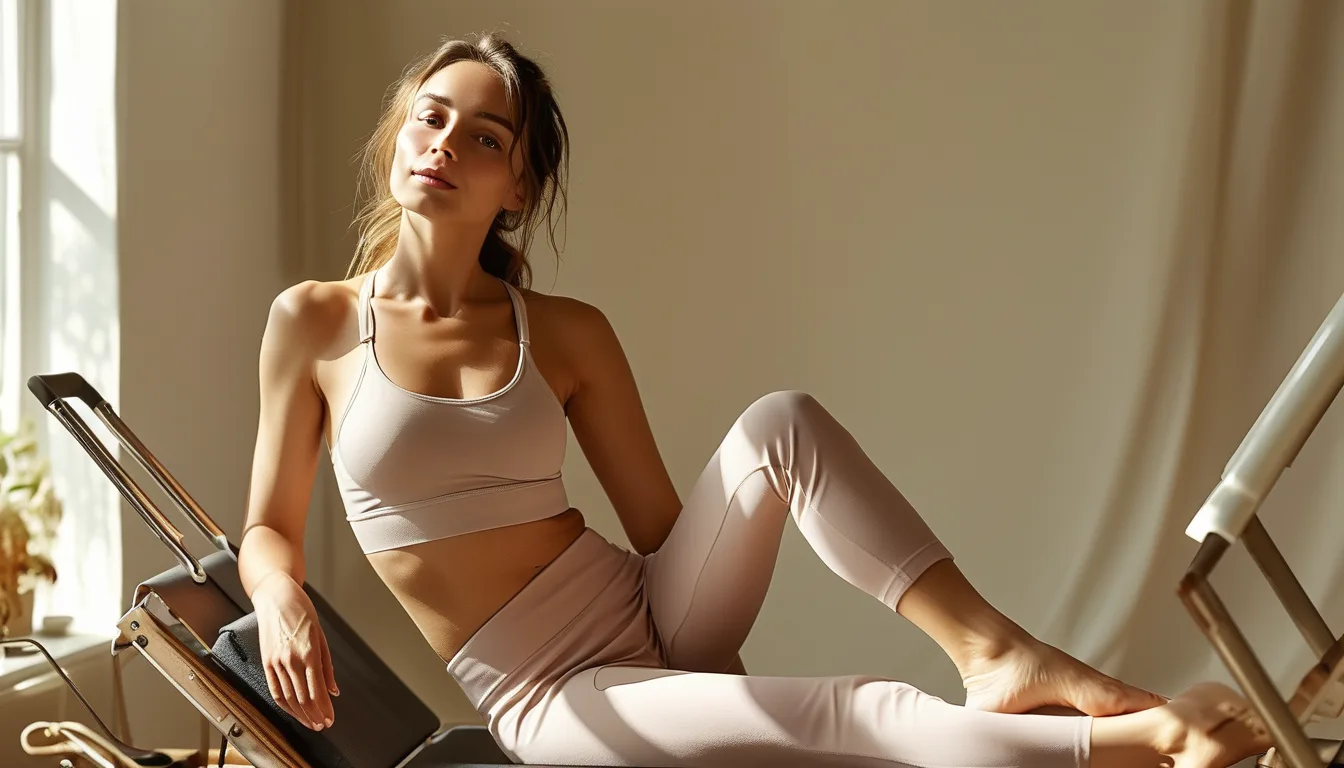
Why Mat Pilates Feels Harder Than the Reformer, and What That Tells You
Quick Answer: Reformer springs do not only resist you — in many of the most familiar exercises they assist you, supporting limbs, guiding the path of movement, and feeding you feedback through the carriage. On the mat there is no assistance anywhere: your own body is the entire load, gravity sets the angles, and every stabilizing job the machine was quietly doing lands back on you. That is why mat classes expose what reformer classes support — and why the founder’s own system treated mat work as the destination, not the warm-up.
Neither format is better. But knowing which one is doing what tells you exactly how to use each.
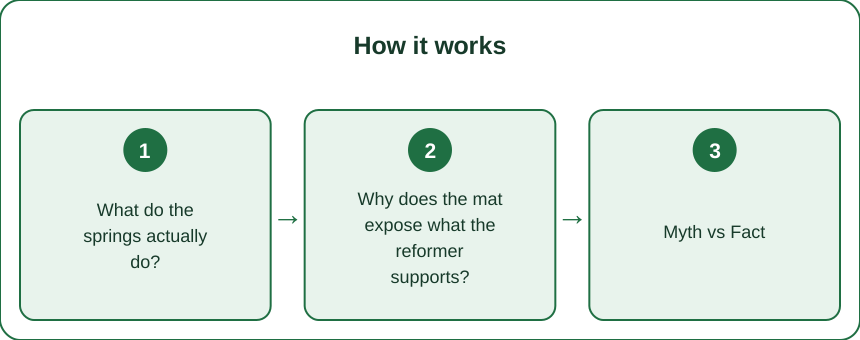
What do the springs actually do?
Both jobs at once — and the assistance half is the one nobody mentions.
Springs resist when an exercise pushes the carriage away against their pull: footwork, arm presses, long stretches. That is the visible, marketed half.
But watch what else they are doing. In feet-in-straps work, the spring is carrying a portion of your leg weight — the strap-and-spring system supports the limbs while you move them, which is precisely why hamstring and hip work in straps feels so luxurious compared to lifting the same legs unaided on a mat. In seated arm work, the ropes define the movement path for you; drift off line and the tension changes to tell you. The moving carriage itself is a feedback machine: wobble, rush, or cheat with momentum, and it clunks and shudders in ways every studio regular learns to hear.
The deepest counterintuitive fact of the machine: lighter springs often make an exercise harder, not easier. Heavy springs stabilize — they hold the carriage firm and give you something solid to move against. Drop to one light spring and the carriage floats, the stability demand skyrockets, and your deep stabilizers inherit the work the springs surrender. Instructors deliberately program light-spring work for exactly this reason, and newcomers chasing heavy-spring effort routinely have the difficulty math backwards.
So a reformer class is a continuous, shifting blend of resistance, assistance, guidance, and feedback. Which is its genius — and which is also a description of everything a mat refuses to provide.
Why does the mat expose what the reformer supports?
Because the mat deletes every subsidy at once.
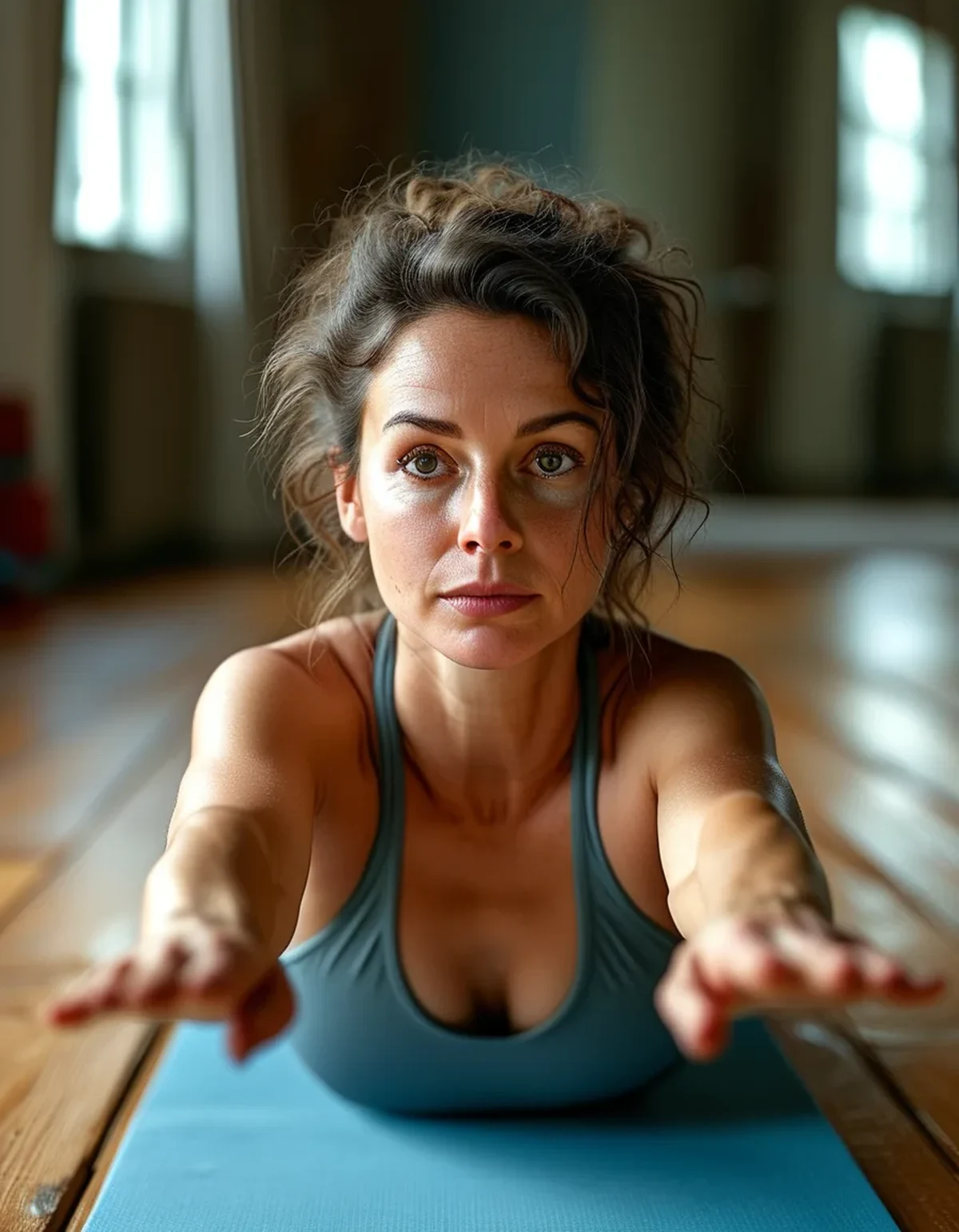
Take the roll-up — mat pilates’ honest gatekeeper. Peeling the spine off the floor one vertebra at a time demands abdominal strength through the exact mid-range where most people are weakest, with zero help: no strap carrying your arms, no spring feeding the movement, no carriage momentum to ride through the sticking point. The reformer’s related exercises give you spring tension to pull against precisely where the roll-up gives you nothing. On the machine the movement flows; on the mat, the flow has to be manufactured entirely from tissue you own.
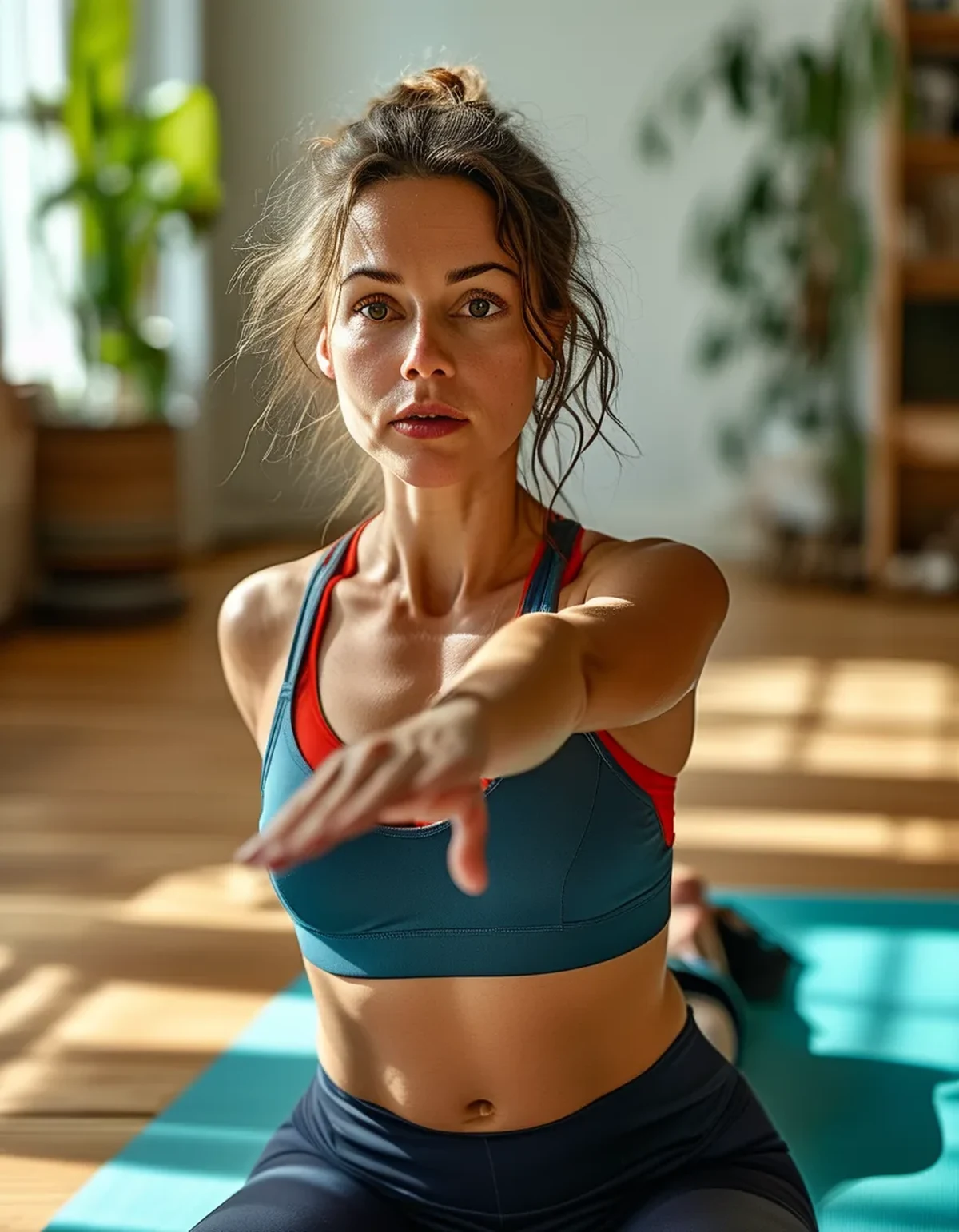
Or the hundred: on the reformer, straps and spring tension load the arms but also anchor them, giving the pattern a frame. On the mat, arms hover and pump against air, legs float where you put them, and every part not actively held simply falls. Gravity is the mat’s only equipment, and gravity refuses to hold anything for you.
The mat also silences the feedback channel. No carriage clunk announces your momentum cheat; the only sensors left are internal. Beginners on mats drift into rocking, flat-spining, and hip-flexor takeover without any machine tattling — which is why unassisted mat work is simultaneously the best test of pilates skill and the worst place to learn it from scratch.
Historical footnote that reframes the hierarchy: in the classical system, the mat sequence was the daily practice — the point of the whole method — and the apparatus existed substantially to prepare and correct bodies for it. The modern studio economy inverted the order. Your shaking roll-up is the original curriculum, encountered without its prep school.
Myth vs Fact: Reformer vs Mat
Myth: The reformer is the advanced level and mat is for beginners. Fact: Closer to the reverse — the machine’s assistance and feedback make it the friendlier teacher, while unsupported mat work is where the method’s full demand lives. Advanced classical mat exercises humble reformer regulars weekly.
Myth: More springs always means harder. Fact: Spring load and difficulty are not the same axis. Heavy springs mean more push but more stability; light springs mean less resistance and far more stabilization demand. Hard depends on which quality the exercise is testing.
Myth: You need a reformer to progress in pilates. Fact: The mat sequence scales from fundamental to brutal using leverage, tempo, and range alone. What the reformer uniquely adds is calibrated assistance, resistance in patterns gravity cannot load, and rich feedback — reasons to love it, none of them prerequisites.
Myth: Mat pilates is just a warm-up or a budget substitute. Fact: It is the method’s self-test: what you can execute alone on a mat is what you actually own. The machine can flatter; the floor audits.
Myth: If mat work shakes you, you are not strong enough for it. Fact: Shaking mid-range is the expected signature of muscles working unassisted at their honest edge — the shake is the exercise landing, not failing. Persistent joint pain is the signal worth acting on; trembling effort is just Tuesday.
Myth: The two formats compete. Fact: They interlock — the machine builds and corrects patterns the mat then tests and hardens. The founder ran it that way on purpose.
How do you use each for what it is best at?
Assign each format its actual job, then let a weekly rhythm do the rest.
Use the reformer to acquire. Learning curve, alignment correction, and loading in patterns the floor cannot offer — straps for hamstrings and hips, footwork for legs under spring load, carriage feedback tuning your control. If a mat exercise keeps defeating you, there is almost always a reformer setup that isolates its missing piece with exactly the right assistance.
Use the mat to audit and own. A weekly self-run mat session — even fifteen minutes — is the honest inventory: roll-up, hundred, single-leg circles, spine stretch. Whatever wobbles on the mat is the thing to bring back to the machine. Home mat work also solves the economics: reformer classes cost what they cost, and a mat plus a floor costs nothing after the first week, which makes the machine-acquires-mat-maintains rhythm the affordable version of a twice-weekly studio habit.
Dress for the equipment’s actual demands. Grip socks are near-universal studio policy and genuinely functional on a moving carriage — bare feet slip on upholstery and straps, and socks without grip are worse. Fitted leggings beat shorts on the reformer for a purely practical reason: legs spend half the class in straps, elevated and moving, and loose fabric migrates while seams and zippers have nowhere comfortable to be against a carriage. The same outfit serves the mat identically, so one uniform covers both worlds.
Read your shaking as a map. Where the mat trembles is where the springs were carrying you — useful intelligence, not embarrassment. Six weeks of aiming reformer time at mat weaknesses visibly rewrites the audit.
And if class scheduling forces a choice some month: pick the format you will actually attend. Consistency in either beats theory about both.
FAQ: Reformer and Mat Questions, Answered
Can mat-only pilates build real strength?
Yes — bodyweight through precise range, slowed tempo, and long-lever progressions is genuine strength work, especially for the trunk. What mat-only training lacks is calibrated external load for the limbs, which is where springs, bands, or weights earn their place alongside it.
How many springs should footwork use?
Whatever loads your legs honestly without recruiting shoulders and neck — and it varies by machine brand, body, and day, which is why instructors adjust rather than prescribe numbers. The better habit is asking what each change does: fewer springs on footwork lightens leg load; fewer springs on standing or kneeling work raises the stability bill.
Why do I shake more on the mat than on the machine at the same exercises?
Because the mat versions are unassisted: no spring carrying limb weight, no strap defining the path, no carriage inertia smoothing the sticking points. The shake marks the support you just gave up — it recedes as the unassisted pattern strengthens.
Are grip socks actually required or just studio upsell?
Both things can be true: studios do sell them, and they also solve a real traction-and-hygiene problem on shared moving equipment. Any brand with rubberized soles satisfies the requirement — the tread is the point, not the logo.
TL;DR:
- Reformer springs assist as often as they resist — carrying limbs, guiding paths, feeding feedback — and lighter springs are frequently the harder setting.
- The mat deletes every subsidy at once, which is why it shakes you: gravity holds nothing, and no carriage reports your cheats.
- Historically the mat was the destination and the machine the preparation — use the reformer to acquire patterns and the mat to audit them.
- One uniform serves both: grip socks and fitted leggings; one weekly self-run mat session keeps the audit honest.
This week, run fifteen unassisted mat minutes and write down what wobbled. That list is your next month of reformer priorities, delivered free.
See It in Motion
Seen here: Super High Waist Embossed Yoga Leggings with Inner Pocket — shop it on bubblelime.com
Keep Reading
This article is for general informational and styling purposes only. Fit, sizing, and product availability may vary.