Sore After Your First Reformer Class? Here's Where You Should (and Shouldn't) Feel It
Quick Answer: Normal reformer soreness after a first class typically shows up in the deep core (obliques, transverse abdominis), inner thighs, and glutes. Soreness concentrated in the neck, lower back, or wrists instead usually signals a form issue worth mentioning to your instructor, not just ‘being new.’
You left your first reformer class feeling like it barely worked — then woke up sore in places you didn’t expect. Where that soreness actually shows up tells you a lot about whether your form was on track.

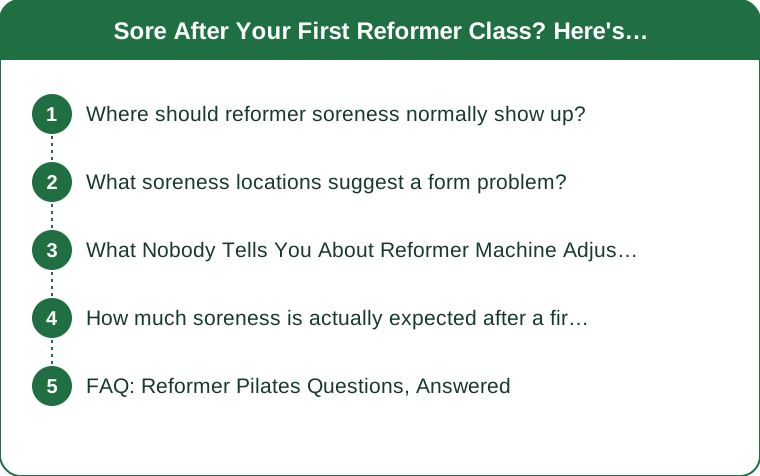
Where should reformer soreness normally show up?
Deep core muscles (obliques, transverse abdominis), inner thighs (adductors), and glutes are the primary movers in most foundational reformer exercises, and soreness there after a first class is a normal, expected sign the class worked as designed.
Mild soreness in the outer thighs and upper back from stabilization work is also normal, especially in exercises requiring you to resist the carriage’s spring tension.
What soreness locations suggest a form problem?
Neck soreness usually means you’re using neck flexors to lift your head instead of curling from the ribs with proper ab engagement — a very common beginner compensation. Lower back soreness (as opposed to deep core/oblique soreness) often indicates insufficient pelvic stability during leg-based exercises, letting the lower back absorb load it shouldn’t.
Wrist soreness from planks or front-support exercises usually means weight is loading through hyperextended wrists rather than a neutral wrist position — worth flagging to an instructor for a hand-placement adjustment.

What Nobody Tells You About Reformer Machine Adjustments
Spring tension selection matters as much as your effort level — using springs that are too heavy for a given exercise often forces compensation patterns (like the neck/back issues above) that lighter, more appropriate resistance would prevent, even for strong beginners.
Most studios default new students to a moderate spring setting that assumes some strength base — asking your instructor to start you on a lighter setting for your first few classes is a completely normal request, not a sign of weakness.
How much soreness is actually expected after a first reformer class?
Mild to moderate soreness for 1-3 days, in the areas described above, is typical for a first class, especially if you’re new to core-focused training generally. Soreness intense enough to significantly limit daily movement, or that appears in joints rather than muscles, is worth mentioning at your next class or to a doctor if severe.
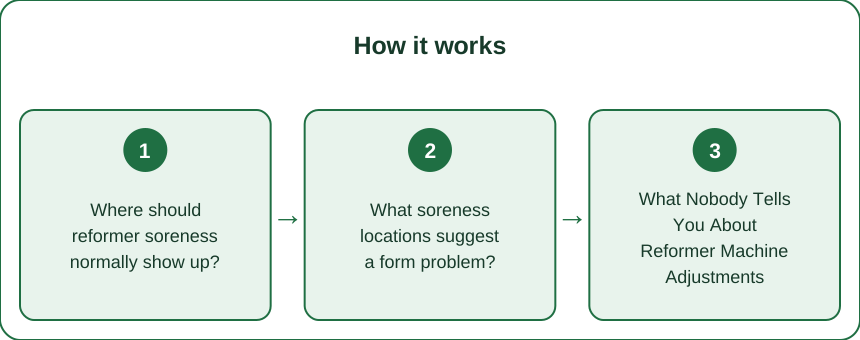
FAQ: Reformer Pilates Questions, Answered
How many reformer classes before soreness stops being so intense?
Most people notice significantly reduced soreness by the 4th-6th class as the specific stabilizer muscles adapt — this is a normal adaptation curve, not a sign you’re doing something wrong if early classes feel intense.
Is it normal to shake during certain reformer exercises?
Yes — muscle shaking (especially in the legs and core during sustained holds) is a normal sign of the stabilizer muscles working near their current capacity, not a warning sign on its own.
Should I tell my instructor if I felt it in the wrong place?
Yes — instructors can adjust spring tension, hand/foot placement, or cueing on the spot, and this feedback is genuinely useful for them, not an imposition.
TL;DR:
- Normal soreness: deep core, inner thighs, glutes
- Form-flag soreness: neck, lower back, or wrists specifically
- Spring tension that’s too heavy often causes the exact compensations that cause ‘wrong’ soreness
- Tell your instructor where you felt it — that feedback helps them adjust your setup
Use where you’re sore as real feedback, not just an aftermath to endure.
Keep Reading
This article is for general informational and styling purposes only. Fit, sizing, and product availability may vary.